Is Thumb Sucking Changing Your Child’s Smile? Signs to Watch For
June 15, 2026
Dr. Bilkisu Idakoji
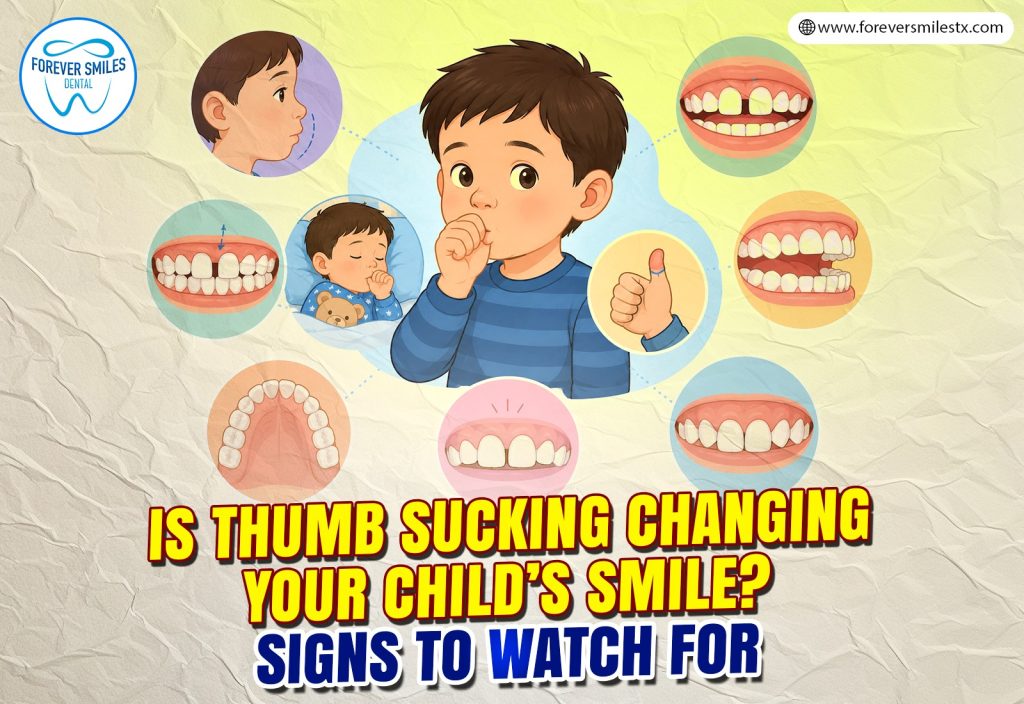
Thumb sucking is one of the most common childhood habits. For infants and young children, it is a natural reflex that provides comfort, security, and a sense of calm. Many children suck their thumbs when they are tired, anxious, bored, or trying to fall asleep. In most cases, the habit gradually fades on its own as children grow.
However, when thumb sucking continues beyond the preschool years, it can begin to affect the way a child’s teeth and jaws develop. What starts as a harmless source of comfort can slowly influence tooth alignment, bite development, and even facial growth.
The challenge is that these changes happen gradually. Parents may not notice a problem until the teeth begin shifting, gaps appear, or the child develops difficulty biting or speaking clearly. By then, the habit may have already influenced the developing smile for several years. Understanding the signs of thumb sucking related dental changes can help parents identify concerns early and take steps to protect their child’s oral development before more significant orthodontic issues arise.
Why Children Suck Their Thumbs
Thumb sucking begins as a natural instinct. Babies are born with a sucking reflex that helps them feed and self-soothe.
As children grow, thumb sucking often serves several purposes:
- Comfort during stressful situations
- Relaxation before sleep
- Coping with boredom
- Emotional reassurance
Some children naturally stop the habit by age two or three. Others continue much longer because it becomes part of their daily routine. The habit itself is not necessarily the problem. What matters most is how often it occurs, how intensely the child sucks their thumb, and how long the behavior continues.
When Should Parents Be Concerned About Thumb Sucking?
Most pediatric dentists consider thumb sucking normal during infancy and early childhood.
Concern generally increases when:
- The habit continues after age four or five
- Permanent teeth begin erupting
- The child sucks their thumb frequently throughout the day
- Strong suction pressure is used
- The thumb remains in the mouth during sleep
The combination of frequency, duration, and intensity determines the potential impact on dental development. A child who occasionally sucks their thumb may experience very little change. A child who sucks aggressively for several hours each day may develop noticeable orthodontic concerns much earlier.
How Thumb Sucking Changes a Child’s Smile Over Time
Children’s teeth and jaws are constantly developing. During these growth years, even small forces can influence how the mouth forms and functions. This is why prolonged thumb sucking can have a noticeable impact on a child’s smile over time. The habit may seem harmless in the early years, but when it continues regularly, the repeated pressure begins to affect the natural development of the teeth and jaws.
Every time a child places their thumb in their mouth, pressure is applied to:
- The upper front teeth
- The lower front teeth
- The roof of the mouth
- The surrounding oral muscles
Unlike a one-time force, thumb sucking often occurs for hours each day and may continue for months or even years. The mouth gradually adapts to this repeated pressure. The upper front teeth may begin moving outward, while the lower front teeth can tilt inward. At the same time, the thumb resting against the roof of the mouth can influence how the upper jaw develops.
The tongue also plays an important role in normal jaw growth. During healthy development, the tongue rests against the roof of the mouth and helps guide the upper jaw into its proper shape. When a thumb occupies that space regularly, normal tongue posture changes. Over time, this can contribute to a narrower upper jaw and create less room for permanent teeth to erupt properly.
Because these changes occur slowly, many parents do not notice them immediately. The smile may appear normal at first, and any shifting is often subtle. However, as permanent teeth begin emerging, the effects become easier to see. Teeth may no longer line up correctly, spaces may develop between the front teeth, or the upper and lower teeth may stop meeting normally when the child bites down.
What makes thumb sucking unique is that it does not simply move individual teeth. It can influence the overall relationship between the upper and lower jaws, alter bite development, and affect facial growth patterns. This is why prolonged thumb sucking is often associated with orthodontic concerns such as open bites, protruding front teeth, crossbites, and crowding later in childhood.
The earlier these changes are recognized, the greater the opportunity to guide healthy development and reduce the need for more extensive orthodontic treatment in the future.
Signs Thumb Sucking May Be Affecting Your Child’s Teeth
Front Teeth Beginning to Stick Out
One of the earliest signs is protrusion of the upper front teeth. The thumb repeatedly pushes against these teeth, encouraging them to move forward. As the teeth shift outward, they become more prominent and noticeable when the child smiles. Protruding front teeth are not only an aesthetic concern. They are also more vulnerable to injuries, chips, and fractures during sports or accidental falls.
Visible Gaps Between the Upper and Lower Front Teeth
Normally, the upper front teeth overlap the lower front teeth slightly when the mouth closes. Children who suck their thumbs for extended periods may develop a gap between these teeth instead. This gap often becomes noticeable when the child bites down. Parents may first notice this while the child is smiling or speaking.
Changes in Tooth Alignment
Thumb sucking can gradually influence the position of surrounding teeth. As pressure continues over time, teeth may begin shifting out of alignment, creating irregular spacing or crowding patterns. The bite may no longer fit together the way it should.
Teeth That No Longer Meet Properly
Some children develop bite changes where certain teeth no longer touch during chewing. This can affect both appearance and function, making everyday activities such as eating less efficient.
Increased Spacing Between Teeth
Repeated pressure may create spaces between teeth that were previously aligned. While spacing itself is not always problematic, new gaps can indicate that the thumb sucking habit is affecting normal dental development.
Signs Thumb Sucking May Be Affecting Jaw Development
Development of an Open Bite
An open bite is one of the most common orthodontic effects of prolonged thumb sucking. In this condition, the upper and lower front teeth fail to meet when the mouth closes. Instead of overlapping normally, a visible gap remains between them.
Children with open bites often struggle to:
- Bite into sandwiches
- Eat apples
- Tear food with their front teeth
The condition can also influence speech development.
Narrowing of the Upper Jaw
The roof of the mouth plays a major role in jaw development. When a thumb occupies this space repeatedly, normal tongue positioning changes. Over time, the upper jaw may become narrower than it should be. A narrow upper jaw can contribute to future crowding and bite problems.
Early Crossbite Formation
A narrowed upper jaw sometimes leads to a crossbite, where upper teeth sit inside lower teeth instead of outside them.
Crossbites can affect:
- Chewing function
- Jaw growth
- Tooth wear patterns
Changes in Facial Growth Patterns
Because oral habits influence muscle activity and jaw development, prolonged thumb sucking can affect facial growth.
Some children develop:
- Longer facial appearance
- Altered jaw positioning
- Changes in lip posture
These effects tend to become more noticeable over time.
Can Thumb Sucking Cause Permanent Damage?
Not all thumb sucking related changes are permanent. If the habit stops early enough, some mild tooth movement may improve naturally as the child grows. However, more significant changes may require orthodontic intervention.
Factors that influence recovery include:
- The child’s age
- The severity of the bite change
- Whether permanent teeth have erupted
- The duration of the habit
The longer the habit continues, the greater the likelihood that professional treatment will be needed.
How Dentists Monitor Thumb Sucking Related Changes
Regular dental visits provide valuable opportunities to monitor development. During evaluations, dentists assess:
- Tooth positioning
- Bite relationships
- Jaw growth
- Eruption patterns
- Signs of habit related pressure
These examinations help identify concerns before they become more difficult to correct. Monitoring is especially important during the transition from baby teeth to permanent teeth.
How Forever Smiles Dental Helps Protect Developing Smiles
At Forever Smiles Dental, oral habits are carefully monitored because they can influence much more than tooth appearance alone. Thumb sucking may seem harmless initially, but prolonged habits can gradually affect bite development, jaw growth, tooth alignment, and overall oral function. By identifying changes early, the dental team can often help prevent minor concerns from developing into more complex orthodontic issues later.
During routine visits, dentists do more than simply check for cavities. They evaluate how a child’s teeth, jaws, and bite are developing together. Even subtle changes caused by thumb sucking can be detected during these growth years, allowing families to take action before the effects become more significant.
The team closely monitors:
- Changes in the position of the front teeth
- Early signs of open bite development
- Narrowing of the upper jaw
- Bite alignment and chewing function
- Eruption patterns of permanent teeth
- Signs that oral habits are affecting facial growth
Parents are also given practical guidance on what to watch for at home. Understanding the difference between normal development and habit-related changes helps families feel more confident about their child’s oral health journey.
At Forever Smiles Dental, the focus is not simply on stopping a thumb sucking habit. The goal is to support healthy development at every stage by:
- Tracking growth and bite changes over time
- Identifying orthodontic concerns as early as possible
- Providing preventive and age-appropriate recommendations
- Helping parents choose the right timing for intervention
- Supporting long-term oral health and function
Through a combination of early monitoring, preventive care, and parent education, Forever Smiles Dental helps children develop healthier smiles while minimizing the long-term effects that prolonged oral habits can have on growing teeth and jaws.
Conclusion
Thumb sucking is a normal part of early childhood, but when the habit continues for too long, it can gradually influence the way a child’s smile develops. The effects often extend beyond the teeth themselves, affecting bite alignment, jaw growth, speech patterns, and oral function.
Because these changes happen slowly, they are easy to overlook in the early stages. Parents who know what signs to watch for are better equipped to recognize when a comfort habit may be becoming a dental concern.
The good news is that early identification creates opportunities for prevention and simpler treatment. Many orthodontic complications can be reduced or avoided altogether when thumb sucking related changes are addressed during childhood.
By paying attention to developing bite patterns, supporting healthy habits, and maintaining regular dental evaluations, parents can help protect their child’s growing smile and encourage healthier oral development for years to come.