Early Warning Signs of Tooth Nerve Infection Parents Shouldn’t Ignore
April 28, 2026
Dr. Bilkisu Idakoji
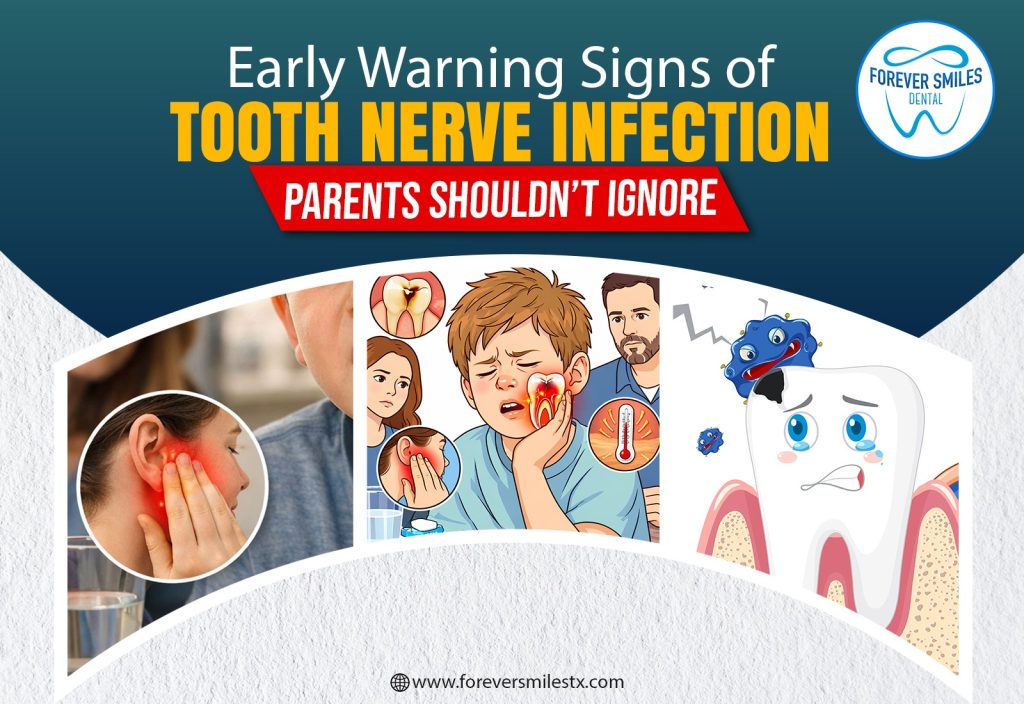
A child complaining of a toothache might not seem like a big deal at first. Maybe it’s something they ate, maybe it’ll go away on its own, these are thoughts most parents have. But what many don’t realize is that some dental problems don’t start with intense pain. In fact, a tooth nerve infection can develop quietly, showing subtle signs long before it becomes a serious issue.
The “tooth nerve,” also known as the pulp, is the innermost part of the tooth. It contains nerves and blood vessels that keep the tooth alive. When bacteria reach this area, the infection can progress rapidly, especially in children, whose teeth have thinner enamel and are more vulnerable to decay.
What makes this condition particularly concerning is that early symptoms are often mild, inconsistent, or easy to dismiss. By the time severe pain appears, the infection may already be advanced, requiring more complex treatment. Understanding the early warning signs of a tooth nerve infection gives parents a critical advantage. It allows them to act before the problem escalates, before discomfort turns into distress, and before simple care becomes a more invasive procedure.
What Is a Tooth Nerve Infection in Children?
Inside every tooth is a soft, living tissue called the pulp. This inner layer contains nerves, blood vessels, and connective tissue that help the tooth grow, stay nourished, and respond to sensations like temperature and pressure. The pulp is protected by the outer layers of the tooth, enamel and dentin, but when these protective layers are compromised, bacteria can find their way inside.
A tooth nerve infection occurs when bacteria penetrate through the enamel and dentin and reach the pulp. Once bacteria enter this space, the body responds with inflammation. Unlike other parts of the body, the pulp is enclosed within a hard tooth structure, so there is very little room for swelling. This leads to increased pressure inside the tooth, which can irritate the nerve and cause discomfort, sensitivity, or pain.
In children, this process tends to happen more quickly than in adults. Baby teeth have thinner enamel and a relatively larger pulp chamber, meaning bacteria have a shorter distance to travel before reaching the nerve. This is why even small, untreated cavities in children can progress faster and become more serious in a shorter period of time. As the infection develops, it may initially cause mild irritation or sensitivity. Over time, it can lead to deeper inflammation, infection of the pulp tissue, and eventually spread beyond the tooth into surrounding areas if left untreated. In some cases, the infection can affect the developing permanent tooth beneath the baby tooth.
What makes tooth nerve infections particularly challenging is that they don’t always begin with obvious symptoms. Some children may not feel pain right away, or the discomfort may come and go. Others may only show subtle signs, such as avoiding certain foods or chewing on one side. These early signals are easy to overlook, but they are often the body’s way of indicating that something deeper is happening.
Understanding what a tooth nerve infection is, and how it develops, helps parents recognize that even small changes in their child’s oral health can be important. Early awareness allows for timely care, which can prevent the infection from progressing into something more serious.
How a Tooth Infection Develops (Step-by-Step)
To understand the warning signs, it helps to know how the infection progresses.
It typically begins with plaque, a sticky film of bacteria that forms on teeth. When sugars from food feed these bacteria, they produce acids that weaken the enamel. Over time, this leads to a cavity. If the cavity is not treated, the decay spreads deeper into the dentin and eventually reaches the pulp. At this stage, bacteria infect the nerve tissue, causing inflammation and irritation. If left untreated, the infection can move beyond the tooth root and form an abscess, a pocket of pus that can spread to surrounding tissues.
This progression doesn’t always cause immediate pain. In fact, the early stages are often silent, which is why recognizing subtle changes is so important.
Early Warning Signs Parents Should Never Ignore
One of the biggest challenges with tooth nerve infections is that the early signs are not always dramatic. They often show up as small, inconsistent changes that can easily be mistaken for something minor or temporary. Paying attention to these subtle signals can make a significant difference in catching the problem early.
Sensitivity to Hot, Cold, or Sweet Foods
One of the earliest signs is increased sensitivity. Your child may suddenly react to cold drinks, hot foods, or sweets in a way they didn’t before, pulling away, wincing, or avoiding certain foods altogether. This sensitivity may come and go, which makes it easy to overlook or assume it’s not serious. However, it often indicates that the enamel has been compromised and the inner layers of the tooth are becoming exposed or irritated. Even occasional sensitivity can be an early warning that bacteria are getting closer to the nerve.
Pain While Chewing or Biting
If your child avoids chewing on one side or complains that it “hurts when I bite,” it may be a sign of pressure-related discomfort. This happens because inflammation inside the tooth increases sensitivity to pressure. Even normal chewing can trigger pain when the pulp is irritated. Children may not always describe this clearly, instead, they might eat more slowly, switch sides while chewing, or avoid certain textures like crunchy or hard foods.
Persistent or Unexplained Toothache
A dull, lingering toothache, even if it’s not severe, should never be ignored. Unlike sharp pain that comes and goes quickly, this type of discomfort may feel like a constant ache or pressure. It might not stop your child from playing or eating, but it tends to return repeatedly or linger in the background. Pain that doesn’t have an obvious cause, such as food stuck between teeth, is often a sign that something deeper, like nerve irritation, is developing.
Swelling Around the Tooth or Gums
Mild swelling near a tooth or along the gumline is another early indicator. It may appear as slight puffiness or redness in a specific area. In the beginning, it might not be painful, which is why it’s easy to ignore. However, swelling signals that the body is responding to irritation or infection beneath the surface. If left unaddressed, this swelling can gradually increase or spread.
Darkening or Discoloration of a Tooth
A tooth that begins to look darker than the surrounding teeth—whether gray, yellow, or slightly brown, may be experiencing internal changes. This discoloration often occurs when the nerve inside the tooth is affected or damaged. Unlike surface stains, this type of color change comes from within the tooth and usually doesn’t go away with brushing. It’s an important visual clue that something deeper may be happening.
A Small Bump on the Gums
Sometimes, a small pimple-like bump appears on the gums near the affected tooth. This is often a sign of an abscess, where the body is trying to release built-up infection. The bump may come and go, or it may drain fluid occasionally. Even if your child doesn’t feel pain at that moment, this is a clear sign that an infection is present and needs attention.
Bad Breath That Doesn’t Go Away
Persistent bad breath that continues even after brushing and rinsing can be another early warning sign. This type of odor is often caused by bacteria inside the tooth or around the gums. Unlike typical “morning breath,” it doesn’t improve easily and may return quickly. It can indicate that bacterial activity is ongoing beneath the surface.
Sensitivity That Suddenly Disappears
This may sound surprising, but a sudden loss of sensitivity can actually be a warning sign. If your child previously complained about sensitivity and then suddenly stops, it may not mean the problem has resolved. In some cases, it indicates that the nerve inside the tooth is no longer responding due to progressing infection. This stage can lead to more serious complications if not addressed.
Recognizing these early signs allows parents to act before the condition worsens. Even if symptoms seem mild or inconsistent, they often provide important clues that something deeper is developing within the tooth.
Symptoms That Mean the Infection Is Getting Worse
As the infection advances, symptoms become more intense and harder to ignore.
Children may experience:
- Severe, throbbing pain
- Swelling in the face or jaw
- Fever or fatigue
- Difficulty eating or sleeping
At this stage, the infection may have spread beyond the tooth, requiring immediate attention.
Why These Infections Are Often Missed
Tooth nerve infections in children are frequently overlooked for several reasons. Children may not describe their pain clearly. What they say as “it feels weird” might actually be significant discomfort.
Symptoms may come and go, creating the illusion that the problem has been resolved. Parents may also assume the issue is related to normal tooth growth, especially during periods when teeth are erupting or falling out. These factors make it easy to delay evaluation—sometimes until the condition has progressed.
What Happens If a Tooth Nerve Infection Is Ignored
Ignoring a nerve infection can lead to serious consequences. The infection can spread to surrounding tissues, affecting gums, bone, and even neighboring teeth. In some cases, it can impact the development of permanent teeth beneath the infected baby tooth.
Treatment becomes more complex as the infection progresses. What could have been managed with early care may require more involved procedures. In rare but serious situations, untreated infections can affect overall health.
How Dentists Diagnose a Tooth Nerve Infection Early
Dentists use a combination of methods to identify infections. They examine the tooth visually, looking for signs of decay, discoloration, or swelling. They may perform sensitivity tests to see how the tooth responds to temperature or pressure.
X-rays are often used to detect infection beneath the surface, including areas not visible during a regular exam. By combining these tools, dentists can determine whether the nerve is affected and how far the infection has progressed.
How Forever Smiles Dental Helps Detect and Treat Infections Early
When it comes to something as serious as a tooth nerve infection, timing and precision make all the difference. At Forever Smiles Dental, the focus is not just on treating pain, but on identifying problems before they reach that stage.
Every evaluation is designed to look beyond the obvious. Subtle signs, like slight discoloration, minor sensitivity, or early gum changes, are carefully assessed to determine whether they could indicate deeper issues. This approach allows concerns to be addressed early, often before a child experiences significant discomfort.
Children are treated in an environment that prioritizes comfort and understanding. Dental visits can feel intimidating, especially when pain is involved, so care is delivered in a way that helps children feel safe and supported. This makes it easier for families to seek help early instead of waiting until symptoms worsen. Parents are also guided through the process with clarity. Rather than simply diagnosing a problem, the team explains what’s happening, why it matters, and what steps can prevent it from progressing.
By combining early detection, gentle care, and a prevention-first mindset, Forever Smiles Dental helps families stay ahead of dental issues, turning what could become a stressful situation into one that is manageable and well understood.
Conclusion
Tooth nerve infections don’t always announce themselves with severe pain. In many cases, they begin with subtle signs, small changes that are easy to overlook but important to recognize.
By paying attention to sensitivity, discoloration, swelling, and other early indicators, parents can take action before the problem escalates. Early detection not only prevents discomfort but also allows for simpler, less invasive treatment. Understanding these warning signs empowers parents to make informed decisions about their child’s oral health.
With timely care, proper guidance, and a proactive approach, most dental issues can be managed effectively, ensuring that children grow up with healthy, pain-free smiles and confidence in their care.