Root Canal Therapy vs. Pulpotomy: Understanding the Difference
April 16, 2025
Dr. Bilkisu Idakoji
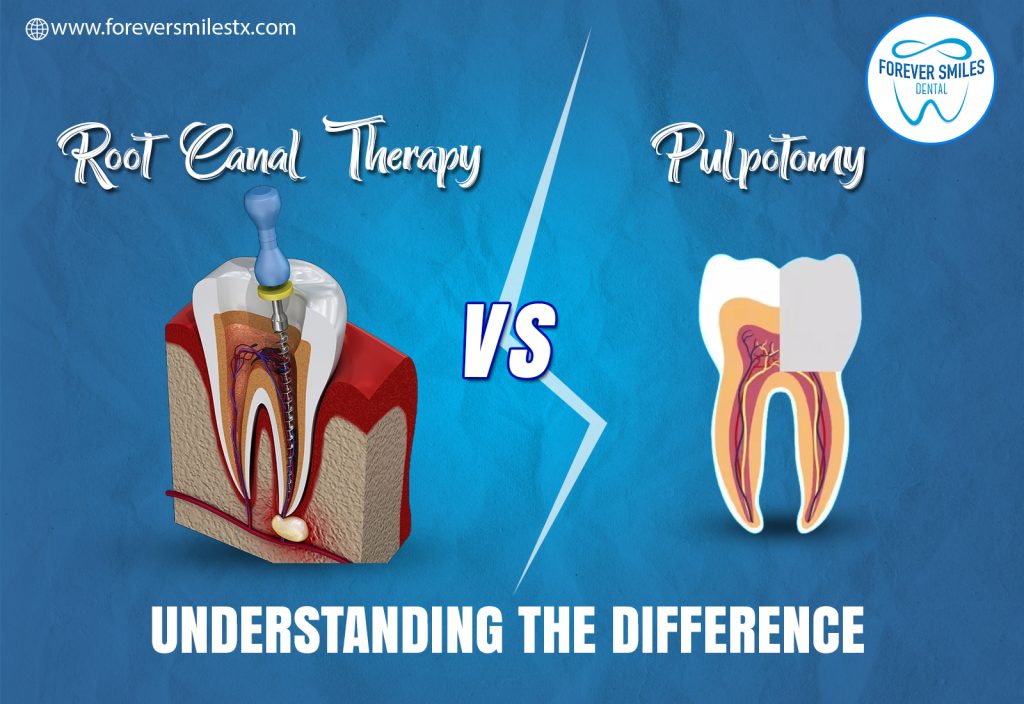
When it comes to treating tooth infections and severe decay, two common procedures often come up: root canal therapy and pulpotomy. Both treatments focus on saving the tooth by removing infected or damaged pulp, but they are not the same. Understanding their differences can help you make an informed decision about which treatment might be best for you or your child.
At Forever Smiles Dental, we specialize in restorative dental treatments, including root canals and pulpotomies. In this blog, we’ll explore how these procedures work, when they are needed, and their benefits.
What Is a Root Canal?
A root canal is a comprehensive procedure designed to remove infected or inflamed pulp from the inner chamber of a tooth. This treatment is typically recommended for patients experiencing deep decay, an abscess, or trauma that has reached the nerve of the tooth.
How Does Root Canal Therapy Work?
- Diagnosis and X-rays – The dentist will first take X-rays to assess the extent of the infection.
- Anesthesia – Local anesthesia is administered to numb the affected tooth and surrounding area.
- Pulp Removal – The dentist creates a small opening in the tooth and removes the infected pulp.
- Cleaning and Shaping – The canals inside the tooth roots are cleaned, shaped, and disinfected.
- Filling the Canals – The empty canals are filled with a biocompatible material called gutta-percha to prevent reinfection.
- Restoration – A dental crown or filling is placed on the tooth to restore its structure and function.
When Is a Root Canal Needed?
You may need a root canal if you experience:
- Severe toothache that doesn’t go away
- Sensitivity to hot or cold that lingers
- Swollen or tender gums
- A pimple-like bump on the gums (abscess)
- Darkening or discoloration of the tooth
A root canal allows the tooth to be saved rather than extracted, preserving your natural smile.
What Is a Pulpotomy?
A pulpotomy is a more conservative treatment, usually performed on baby teeth or in some cases on permanent teeth when the damage is limited to the pulp’s upper portion. This procedure is commonly used in pediatric dentistry to relieve pain and infection while allowing the tooth to remain functional until it naturally falls out.
How Does a Pulpotomy Work?
- Diagnosis and X-rays – The dentist takes X-rays to determine the extent of the decay.
- Anesthesia – Local anesthesia is applied to numb the area.
- Partial Pulp Removal – The infected portion of the pulp is removed, but the root canals are left intact.
- Medication Application – A medicated dressing is placed over the remaining pulp to soothe the nerve and prevent infection.
- Tooth Restoration – The tooth is sealed with a filling or, in many cases, covered with a crown for added protection.
When Is a Pulpotomy Needed?
A pulpotomy is typically recommended when:
- A child has a large cavity but the infection hasn’t reached the tooth roots
- There is no swelling or abscess formation
- The goal is to preserve a primary (baby) tooth until it falls out naturally
Unlike a root canal, a pulpotomy does not involve cleaning and sealing the entire root canal system.
Key Differences Between Root Canal and Pulpotomy
While both root canal therapy and pulpotomy are designed to treat infected or damaged pulp, they differ in several ways.
A root canal is a more comprehensive procedure that removes all infected pulp from both the crown and root canals of a tooth. It is typically performed on permanent teeth that have severe decay or deep infections. The procedure involves cleaning and sealing the entire root canal system to prevent reinfection, and the tooth is usually restored with a dental crown for added strength and protection.
On the other hand, a pulpotomy is a less invasive treatment, usually performed on baby teeth or permanent teeth with minor pulp damage. In this procedure, only the infected pulp in the crown portion of the tooth is removed, while the healthy pulp in the roots remains intact. A medicated dressing is applied to the remaining pulp to soothe the nerve and prevent infection. The tooth is then restored with a filling or a crown, especially in the case of baby teeth.
A root canal is a permanent solution for saving a tooth and preventing further damage, whereas a pulpotomy is a temporary measure to preserve a baby tooth until it naturally falls out. If the infection progresses after a pulpotomy, a full root canal or extraction may be needed.
Which Treatment Is Right for You?
The decision between a root canal and a pulpotomy depends on several factors, including the extent of the infection, the type of tooth affected, and the patient’s age.
Choose Root Canal Therapy If:
- The infection has spread deep into the roots
- You have a permanent tooth that needs preservation
- You want a long-term solution to save the tooth
Choose a Pulpotomy If:
- The decay is limited to the crown portion of a baby tooth
- The goal is to retain a primary tooth until it naturally falls out
- The infection has not reached the roots
Your dentist at Forever Smiles Dental will carefully evaluate your condition and recommend the most suitable treatment based on your specific needs.
Benefits of Root Canal Therapy and Pulpotomy
Both procedures provide essential benefits for patients suffering from tooth infections or decay.
Benefits of Root Canal Therapy
- Saves the natural tooth, avoiding extraction
- Prevents further infection and abscess formation
- Restores chewing and speaking functions
- Protects surrounding teeth from shifting
Benefits of Pulpotomy
- Preserves baby teeth to maintain proper spacing for permanent teeth
- Prevents the need for early tooth extraction
- Provides a quick and effective pain relief solution for children
Both treatments are performed under local anesthesia, ensuring minimal discomfort during the procedure.
Does a Pulpotomy Always Work?
While pulpotomy is generally successful, there are instances where the infection progresses, requiring a full root canal or even extraction. Regular follow-ups with your dentist will ensure that the treated tooth remains healthy.
Caring for Your Tooth After Treatment
To ensure the success of your root canal or pulpotomy, follow these care tips:
- Maintain Good Oral Hygiene – Brush twice a day and floss daily.
- Avoid Hard and Sticky Foods – These can damage restorations.
- Attend Regular Check-Ups – Routine visits to Forever Smiles Dental will help monitor the treated tooth.
- Use a Mouthguard – If you grind your teeth at night, a mouthguard can protect your restoration.
Conclusion
Understanding the difference between root canal therapy and pulpotomy can help you make the right decision for your dental health. While both procedures aim to relieve pain and prevent further infection, root canals are ideal for permanent teeth with severe damage, whereas pulpotomies are primarily used for baby teeth with limited decay.
At Forever Smiles Dental, we provide expert care tailored to your needs, ensuring a comfortable and effective treatment experience. If you or your child are experiencing tooth pain or sensitivity, schedule a consultation with Forever Smiles Dental today. We’re here to help you achieve a healthy and pain-free smile!