Why Does My Child’s Jaw Click or Pop? Understanding TMJ-Related Bite Problems
July 10, 2026
Dr. Bilkisu Idakoji
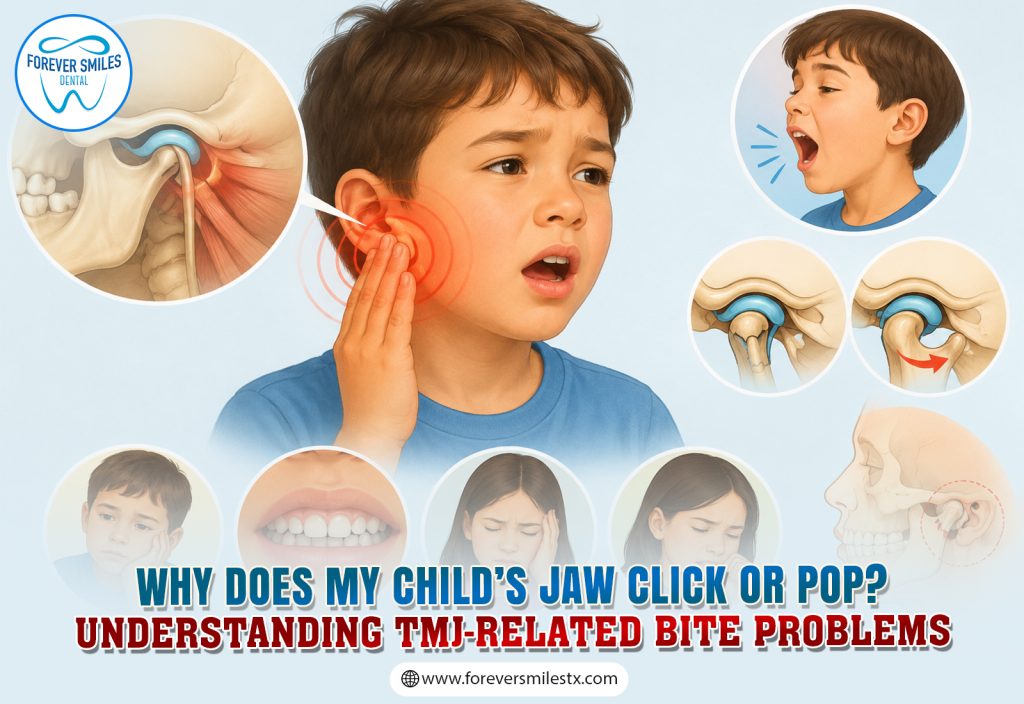
Hearing a clicking or popping sound when your child opens their mouth can be surprising and even concerning. Many parents first notice the sound during meals, while their child is talking, or when they yawn. In some cases, the child may not even be aware that their jaw is making noise. In others, they may mention that their jaw feels strange, gets tired while chewing, or occasionally hurts.
A clicking jaw does not always indicate a serious problem. In fact, some children experience occasional jaw noises without pain or functional difficulties. However, when clicking becomes frequent or is accompanied by discomfort, headaches, chewing problems, or bite changes, it may signal an issue involving the temporomandibular joint, commonly known as the TMJ.
The TMJ is one of the most active joints in the body, responsible for helping the jaw move smoothly throughout the day. Because this joint works closely with the teeth, muscles, and bite, problems in one area can sometimes affect the others. Understanding why jaw clicking occurs and how it relates to bite development can help parents recognize when professional evaluation may be beneficial.
What Is the TMJ?
The temporomandibular joint, or TMJ, is the joint that connects the lower jaw to the skull. There is one TMJ on each side of the head, located just in front of the ears.
This joint allows the jaw to:
- Open and close
- Move side to side
- Move forward and backward
- Perform the complex motions needed for chewing and speaking
Unlike many joints in the body, the TMJ combines both hinge and sliding movements. This allows for a wide range of motion and makes it one of the most frequently used joints in daily life.
Inside the joint is a small disc made of cartilage. This disc acts as a cushion between the jawbone and skull, helping the joint move smoothly and comfortably. When all parts of the TMJ work together properly, jaw movements occur without pain, noises, or limitations.
Why Does a Child’s Jaw Click or Pop?
Jaw clicking can occur for several reasons. Some are relatively harmless, while others may indicate developing TMJ-related concerns.
Normal Joint Movement
Occasional clicking is not always a sign of a disorder. Some children experience brief jaw noises during periods of growth and development without any pain or functional problems. If the sound is infrequent and does not cause discomfort, it may simply reflect normal variations in joint movement.
Joint Disc Movement
One of the most common causes of clicking involves the small disc inside the TMJ. Ideally, the disc remains positioned between the jawbone and skull throughout jaw movement. If the disc shifts slightly out of position, it may create a clicking or popping sound as the jaw opens and closes. This is often referred to as disc displacement with reduction.
Bite Alignment Problems
The way teeth fit together can influence jaw function. If the bite is uneven, the jaw may need to adapt repeatedly during chewing and speaking. Over time, this can place additional stress on the TMJ and surrounding muscles.
Teeth Grinding and Clenching
Children who grind or clench their teeth often place extra pressure on the jaw joints.
Repeated muscle tension can contribute to:
- Jaw fatigue
- Clicking
- Joint irritation
- Facial soreness
Jaw Muscle Tension
Muscle tightness in the face and jaw can alter the way the jaw moves. This tension sometimes develops due to stress, grinding habits, or bite imbalances.
Growth and Development Changes
Children’s jaws continue growing throughout childhood and adolescence. As growth occurs, temporary changes in jaw mechanics can occasionally contribute to clicking sounds.
Signs That Jaw Clicking May Be Related to TMJ Problems
While occasional clicking may not be concerning, certain symptoms deserve closer attention.
Frequent Clicking or Popping Sounds
Clicking that occurs consistently every time the child opens or closes their mouth may indicate changes within the joint.
Jaw Pain or Tenderness
Pain around the jaw joint, cheeks, or temples may suggest joint or muscle involvement.
Difficulty Opening the Mouth Fully
Some children experience restricted jaw movement or discomfort when opening widely.
Jaw Locking or Catching
The jaw may occasionally feel stuck, catch during movement, or require repositioning before it opens normally.
Headaches and Facial Pain
TMJ-related muscle tension can sometimes contribute to headaches, particularly around the temples.
Ear Pain Without an Ear Infection
Because the TMJ sits close to the ears, jaw problems can sometimes create symptoms that feel similar to ear discomfort.
Clicking Accompanied by Bite Changes
Changes in how the teeth fit together may indicate that jaw function is being affected.
The Connection Between Bite Problems and TMJ Issues
The jaw joints and teeth work as part of the same system. Every time a child bites, chews, swallows, or speaks, the teeth and jaw joints must function together smoothly.
How Teeth and Jaw Joints Work Together
When the bite is balanced, chewing forces are distributed evenly throughout the mouth. When the bite is not balanced, certain areas may experience more pressure than others. Over time, this imbalance can influence jaw movement and muscle activity.
Open Bites, Crossbites, and Crowding
Certain orthodontic conditions may affect jaw function.
These include:
- Open bites
- Crossbites
- Severe crowding
- Significant overbites
- Underbites
While not every child with these conditions develops TMJ symptoms, bite irregularities can contribute to abnormal jaw mechanics.
Uneven Bite Pressure
When teeth do not fit together properly, the jaw may compensate by shifting into alternative positions. Repeated compensation can place strain on both muscles and joints.
The Effect of Misaligned Teeth on Jaw Function
Misalignment may influence:
- Chewing efficiency
- Muscle activity
- Joint loading patterns
- Long-term jaw comfort
Why Growing Children May Develop TMJ Symptoms
As children grow, changes in tooth eruption and jaw development can temporarily affect how the bite functions. Monitoring these changes helps ensure that developing issues are addressed appropriately.
Common Causes of TMJ-Related Bite Problems in Children
TMJ-related symptoms rarely develop without an underlying reason. In many cases, a combination of habits, growth patterns, and bite issues can place additional stress on the jaw joints and surrounding muscles. Understanding the most common causes can help parents identify factors that may be contributing to their child’s jaw clicking, discomfort, or bite concerns.
Teeth Grinding (Bruxism)
Grinding is one of the most common contributors to jaw strain. Children who grind their teeth, particularly during sleep, place repeated pressure on the jaw joints and muscles. Over time, this constant tension can lead to symptoms such as:
- Jaw soreness
- Facial fatigue
- Morning headaches
- Tooth sensitivity
- Increased tooth wear
Because grinding often occurs at night, many children are unaware they are doing it.
Thumb Sucking and Oral Habits
Long-term thumb sucking, prolonged pacifier use, and tongue thrusting habits can affect how the teeth and jaws develop. These changes may alter bite alignment and place additional stress on the TMJ as the child grows.
Mouth Breathing and Jaw Development
Chronic mouth breathing can influence facial growth, tongue posture, and jaw positioning. Over time, these developmental changes may contribute to bite irregularities that affect jaw function and stability.
Sports Injuries and Trauma
Falls, sports injuries, or direct impacts to the face and jaw can affect the TMJ. While some children experience immediate symptoms, others may not notice clicking, discomfort, or movement changes until weeks or months after the injury.
Orthodontic and Growth Factors
Every child’s jaws grow differently. Inherited jaw relationships, uneven growth patterns, crossbites, open bites, or other orthodontic concerns can influence how the jaw joints function. As children grow, these factors may contribute to TMJ symptoms if the bite and jaw movement become less balanced.
When Should Parents Be Concerned About Jaw Clicking?
Parents should consider professional evaluation if jaw clicking is accompanied by:
- Pain
- Headaches
- Difficulty chewing
- Jaw locking
- Limited jaw movement
- Facial discomfort
- Changes in bite alignment
Persistent symptoms deserve attention, even if they seem mild initially. Early evaluation helps identify whether the clicking is harmless or related to an underlying issue.
How Dentists Diagnose TMJ and Bite Problems
Diagnosing TMJ-related concerns involves more than simply listening for clicking sounds.
Dentists evaluate:
- Jaw movement patterns
- Joint sounds
- Bite alignment
- Tooth wear
- Muscle tenderness
- Growth and development
They also discuss:
- Grinding habits
- Oral habits
- Symptoms
- Previous injuries
In some cases, imaging may be recommended if additional information is needed. The goal is to understand not only the symptom but also the factors contributing to it.
Treatment Options for TMJ-Related Bite Problems in Children
Treatment depends on the cause and severity of symptoms.
Monitoring Mild Cases
Children with occasional clicking but no pain may simply require observation and regular follow-up.
Addressing Oral Habits
Reducing habits such as thumb sucking can improve bite development and jaw function.
Managing Teeth Grinding
Identifying and managing grinding habits can reduce stress on the TMJ.
Orthodontic Guidance
When bite alignment contributes to symptoms, orthodontic monitoring or treatment may be beneficial.
Bite Correction and Growth Monitoring
Growth provides opportunities to guide development and address emerging concerns before they become more significant.
Protecting Long-Term Jaw Health
The overall goal is to support healthy jaw function while minimizing strain on the joints and muscles.
What Happens If TMJ Problems Are Ignored?
Not every clicking jaw progresses into a serious disorder. However, persistent symptoms should not be dismissed, especially when they occur regularly or are accompanied by discomfort. TMJ-related issues often develop gradually, which means small symptoms can sometimes become more noticeable over time if the underlying cause remains unaddressed.
Potential consequences may include:
Increasing Jaw Discomfort
What begins as an occasional clicking sound may eventually be accompanied by soreness, tenderness, or discomfort during everyday activities such as chewing, talking, or yawning.
Worsening Bite Issues
If bite-related factors are contributing to TMJ symptoms, those alignment problems may continue developing as the child grows. Changes in the way the teeth fit together can place additional strain on the jaw joints.
Difficulty Chewing
Jaw discomfort can affect chewing efficiency, causing some children to avoid certain foods or chew primarily on one side of the mouth.
Chronic Muscle Tension
Ongoing stress on the jaw muscles may contribute to headaches, facial fatigue, neck discomfort, or tension around the temples.
Long-Term Functional Concerns
When jaw function remains imbalanced for an extended period, it can affect overall comfort and oral function. Early evaluation and management often help reduce the risk of more complex issues developing later, while supporting healthier jaw movement throughout childhood and adolescence.
How Forever Smiles Dental Helps Children With TMJ and Bite Development
At Forever Smiles Dental, jaw function is evaluated as part of a child’s overall oral development. A clicking or popping jaw is not viewed in isolation. Instead, the dental team looks at how the teeth, jaws, muscles, and bite work together to understand the complete picture.
During routine evaluations, attention is given to:
- Bite alignment and tooth positioning
- Jaw movement patterns
- Signs of teeth grinding or clenching
- Growth and development of the jaws
- Oral habits that may influence bite function
- Symptoms such as headaches, facial discomfort, or chewing difficulties
The team also helps parents understand whether jaw sounds are simply developmental changes or signs that further monitoring may be needed. Early identification allows many concerns to be addressed before they begin affecting comfort, function, or long-term oral health.
By focusing on prevention, education, and careful monitoring, Forever Smiles Dental helps children develop healthier bites and more comfortable jaw function as they grow.
Conclusion
A clicking or popping jaw can be surprising, but it is not always a cause for alarm. In many children, occasional jaw noises occur without pain or long-term consequences. However, persistent clicking, discomfort, headaches, chewing difficulties, or bite changes may indicate that the jaw joints and bite are not functioning as smoothly as they should.
Because the TMJ works closely with the teeth, muscles, and growing jaws, even minor bite imbalances can sometimes contribute to symptoms over time. Understanding the connection between jaw clicking and bite development allows parents to recognize when professional evaluation may be beneficial.
With early monitoring, proper diagnosis, and appropriate guidance, many TMJ-related concerns can be managed effectively. Paying attention to symptoms and seeking evaluation when needed helps support healthy jaw function, comfortable chewing, and confident smiles throughout childhood and beyond.