What Is Dental Crowding? Signs, Causes, and When Parents Should Be Concerned
June 30, 2026
Dr. Bilkisu Idakoji
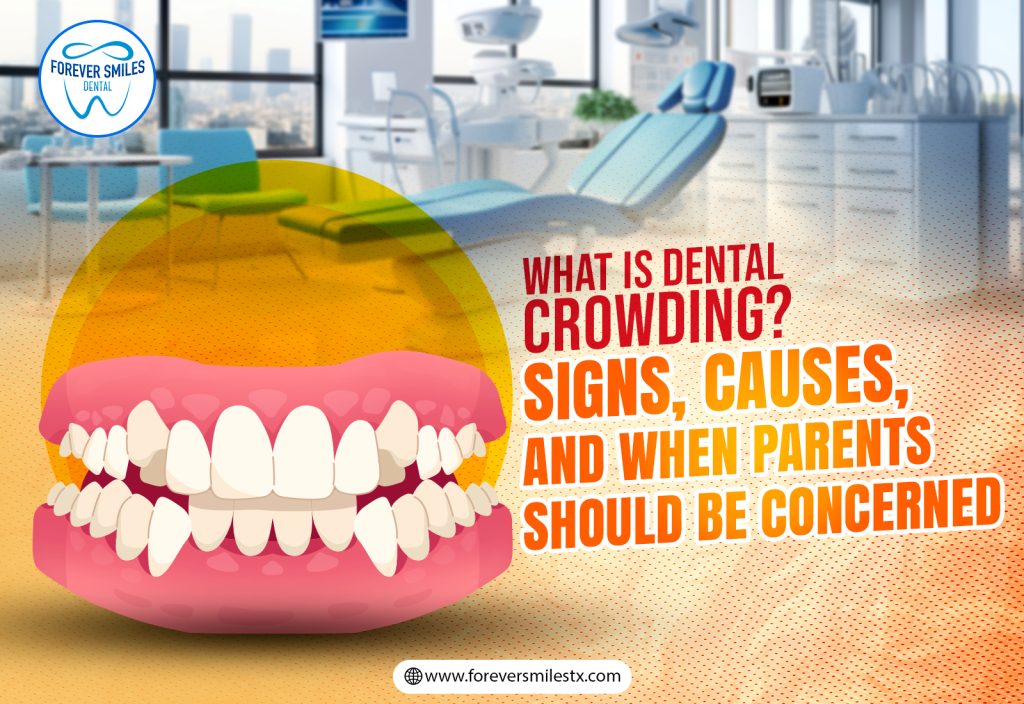
One of the most common reasons parents seek orthodontic advice is because their child’s teeth appear crowded. They may notice teeth overlapping, twisting, or erupting in unexpected positions and wonder whether the issue will resolve on its own as more permanent teeth come in. While dental crowding is extremely common, it is often misunderstood. Many people assume that crowded teeth are simply a cosmetic concern that affects the appearance of a smile. In reality, crowding can influence oral hygiene, bite function, tooth wear, and long-term dental health.
The good news is that crowding usually develops gradually, giving dentists and orthodontists an opportunity to monitor changes and recommend treatment when appropriate. The earlier crowding is identified, the more options may be available to guide healthy dental development.
Understanding what dental crowding is, why it occurs, and when parents should be concerned can help families make informed decisions about their child’s oral health and future smile.
What Is Dental Crowding?
Dental crowding occurs when there is not enough space in the jaw for all the teeth to align properly. As a result, teeth may overlap, rotate, shift out of position, or erupt in abnormal locations.
Ideally, each tooth should have enough room to emerge into its proper position within the dental arch. When space is limited, teeth compete for available room and begin pushing against one another.
Crowding can affect:
- Baby teeth
- Permanent teeth
- The upper arch
- The lower arch
- Both arches simultaneously
Orthodontists generally describe crowding as mild, moderate, or severe depending on the amount of space available.
Mild Crowding
Mild crowding may involve slight overlapping or small rotations of one or two teeth. These cases are often subtle but still worth monitoring.
Moderate Crowding
Moderate crowding becomes more noticeable. Multiple teeth may overlap, twist, or erupt outside their normal positions.
Severe Crowding
Severe crowding occurs when there is significant space deficiency. Teeth may erupt far outside the dental arch or become blocked from erupting normally.
Crowding can begin appearing during the transition from baby teeth to permanent teeth, although the underlying causes often develop much earlier.
What Causes Dental Crowding in Children?
Several factors can contribute to dental crowding.
Genetics and Jaw Size
Genetics is one of the most common causes of crowding.
Children may inherit:
- Smaller jaws from one parent
- Larger teeth from the other parent
This combination often creates a mismatch between tooth size and available jaw space.
Because jaw size and tooth size are inherited independently, crowding frequently runs in families.
Large Teeth and Limited Space
Even without a family history of orthodontic problems, some children naturally develop larger teeth that require more room than their jaw can comfortably provide.
As permanent teeth emerge, space shortages become increasingly obvious.
Early Loss of Baby Teeth
Baby teeth serve an important purpose beyond chewing. They help maintain space for permanent teeth.
When a baby tooth is lost too early due to decay or trauma, nearby teeth may drift into the empty space. This can reduce room for the permanent tooth waiting underneath.
Delayed Loss of Baby Teeth
The opposite problem can also occur.
If baby teeth remain in place longer than expected, they may interfere with the eruption path of permanent teeth, forcing them to emerge in crowded or unusual positions.
Mouth Breathing and Oral Development
Breathing patterns can influence jaw development.
Children who consistently breathe through their mouths often develop altered tongue posture and facial growth patterns. These changes can contribute to narrower dental arches and reduced space for teeth.
Thumb Sucking and Other Oral Habits
Prolonged thumb sucking, pacifier use, and tongue thrusting can affect how the jaws and teeth develop.
Over time, these habits may influence spacing and contribute to orthodontic concerns, including crowding.
Abnormal Tooth Eruption Patterns
Sometimes teeth simply erupt in unusual positions due to developmental variations. These eruption patterns can contribute to crowding even when overall jaw size appears adequate.
Early Signs of Dental Crowding Parents Should Watch For
Crowding often develops gradually. Recognizing the early signs can help parents seek evaluation before the problem becomes more severe.
Teeth That Overlap or Twist
One of the earliest signs is visible overlap between neighboring teeth.
Teeth may:
- Rotate slightly
- Lean toward one another
- Appear stacked
- Sit at unusual angles
Permanent Teeth Erupting Behind Baby Teeth
Sometimes permanent teeth emerge behind baby teeth rather than directly underneath them.
This phenomenon is often called “shark teeth” and may indicate spacing concerns.
Teeth Appearing Crooked Soon After Eruption
Newly erupted permanent teeth are not always perfectly straight, but significant misalignment early on may signal crowding.
Difficulty Flossing Between Teeth
Tightly packed teeth can make flossing difficult.
Parents may notice:
- Floss shredding
- Difficulty passing floss between teeth
- Areas that are hard to clean properly
Changes in Bite Alignment
Crowding can influence how upper and lower teeth fit together.
Changes in bite function may become noticeable as more permanent teeth emerge.
Teeth That Look Too Big for the Mouth
Sometimes the problem is obvious visually. Parents may feel that the permanent teeth appear too large relative to the available space in the jaw.
Why Dental Crowding Is More Than a Cosmetic Concern
Many parents initially focus on appearance, but crowding can affect oral health in several important ways.
Increased Risk of Cavities
Crowded teeth create additional hiding places for plaque and bacteria. These areas are often difficult to clean effectively with brushing alone, increasing the likelihood of decay.
Greater Plaque and Tartar Accumulation
When teeth overlap, food particles become trapped more easily. This promotes plaque buildup and can lead to tartar formation over time.
Gum Inflammation and Oral Hygiene Challenges
Poor access for brushing and flossing can contribute to gum irritation and inflammation. Children with crowding may be more susceptible to gingivitis if oral hygiene becomes difficult.
Uneven Tooth Wear
Misaligned teeth may experience abnormal chewing forces. Over time, this can create uneven wear patterns that affect the enamel.
Bite and Jaw Function Problems
Significant crowding can affect the way teeth fit together.
This may contribute to:
- Chewing difficulties
- Bite imbalances
- Jaw strain
- Functional concerns
Impact on Confidence and Self-Esteem
As children grow older, they become increasingly aware of their appearance. Visible crowding may affect:
- Smiling
- Social interactions
- Self-confidence
While every child responds differently, orthodontic concerns can influence emotional well-being during important developmental years.
Can Dental Crowding Get Worse Over Time?
In many cases, yes.
Crowding often becomes more noticeable as additional permanent teeth erupt. Each new tooth requires space, and existing space shortages may become increasingly apparent.
As growth continues:
- Teeth may rotate further
- Overlap may increase
- Cleaning may become more difficult
- Bite relationships may change
Some parents hope that incoming permanent teeth will naturally straighten existing crowding. While minor alignment changes can occur during development, significant crowding rarely resolves completely on its own. This is why monitoring remains so important.
When Should Parents Be Concerned?
Not every crowded tooth requires immediate treatment. However, certain situations deserve professional evaluation. Parents should consider scheduling an assessment if they notice:
- Significant overlap between teeth
- Permanent teeth erupting in unusual locations
- Difficulty maintaining oral hygiene
- Changes in bite function
- Teeth that appear blocked from erupting
- Crowding that seems to worsen over time
Many orthodontic concerns are first identified between ages seven and ten, which is why early evaluations are often recommended. Waiting is sometimes appropriate, but waiting without monitoring can allow problems to become more complex.
How Dentists and Orthodontists Evaluate Dental Crowding
Evaluating crowding involves much more than simply looking at the teeth.
Dental professionals assess:
- Available space in the jaw
- Tooth size relationships
- Eruption patterns
- Bite alignment
- Facial growth
- Jaw development
Dental X-rays often provide valuable information about teeth that have not yet erupted.
These images help identify:
- Impacted teeth
- Missing teeth
- Extra teeth
- Future space concerns
This comprehensive evaluation allows dentists and orthodontists to determine whether treatment is needed and when intervention would be most beneficial.
Treatment Options for Dental Crowding in Children
Treatment for dental crowding depends on several factors, including the severity of the crowding, the amount of available space in the jaw, the child’s age, and the stage of dental development. Not every crowded smile requires immediate orthodontic treatment. In many cases, dentists carefully monitor growth before deciding on the most appropriate approach.
Monitoring and Observation
Some cases simply require observation as the child grows. Regular monitoring allows dental professionals to track changes in tooth eruption, jaw growth, and spacing patterns. This approach helps determine whether crowding is likely to improve naturally or if intervention may become necessary in the future.
Space Maintainers
When baby teeth are lost prematurely due to decay, injury, or extraction, neighboring teeth may drift into the empty space. Space maintainers help preserve this room so permanent teeth have a better chance of erupting in their proper positions.
Early Orthodontic Treatment
Certain crowding issues benefit from early intervention while the jaws are still developing. Addressing problems during growth can sometimes reduce the severity of future orthodontic concerns and create a healthier environment for incoming permanent teeth.
Palatal Expansion
For children with a narrow upper jaw, palatal expansion may be recommended. Expansion appliances gradually widen the upper arch, creating additional room for developing teeth and improving overall alignment potential.
Braces and Aligners
Traditional braces or clear aligners may be used to move teeth into healthier positions, improve spacing, and create a more balanced bite. These treatments are often recommended once a sufficient number of permanent teeth have erupted.
Guiding Eruption of Permanent Teeth
In some situations, treatment focuses on helping permanent teeth erupt into more favorable positions as growth continues. By carefully monitoring tooth development and timing treatment appropriately, dentists and orthodontists can often prevent more severe crowding from developing later.
How Forever Smiles Dental Helps Identify Crowding Early
At Forever Smiles Dental, monitoring tooth eruption and jaw development is an important part of every child’s ongoing dental care. Crowding often begins developing years before it becomes obvious, which is why early observation can make such a meaningful difference.
During routine examinations, the dental team evaluates:
- Available space for incoming permanent teeth
- Tooth alignment and positioning
- Bite development
- Jaw growth patterns
- Signs of emerging crowding
By tracking these changes over time, potential concerns can often be identified before they become more significant orthodontic challenges.
Parents receive clear explanations about what is normal, what deserves monitoring, and when orthodontic evaluation may be beneficial. This proactive approach helps families make informed decisions and supports healthier long-term oral development.
Conclusion
Dental crowding is one of the most common orthodontic concerns in children, but it involves much more than the appearance of a smile. When there is insufficient space for teeth to align properly, crowding can affect oral hygiene, bite function, tooth wear, and overall dental health.
Because crowding often develops gradually, parents may not recognize the signs until permanent teeth begin emerging. Fortunately, early monitoring and professional evaluation can help identify concerns before they become more complex.
By understanding the causes, recognizing the warning signs, and seeking guidance when needed, parents can take proactive steps to support healthy dental development. With appropriate monitoring and treatment when necessary, children can achieve healthier, more functional, and more confident smiles that last well into adulthood.