Are Tooth Colored Fillings Better for Children?
September 29, 2026
Dr. Bilkisu Idakoji
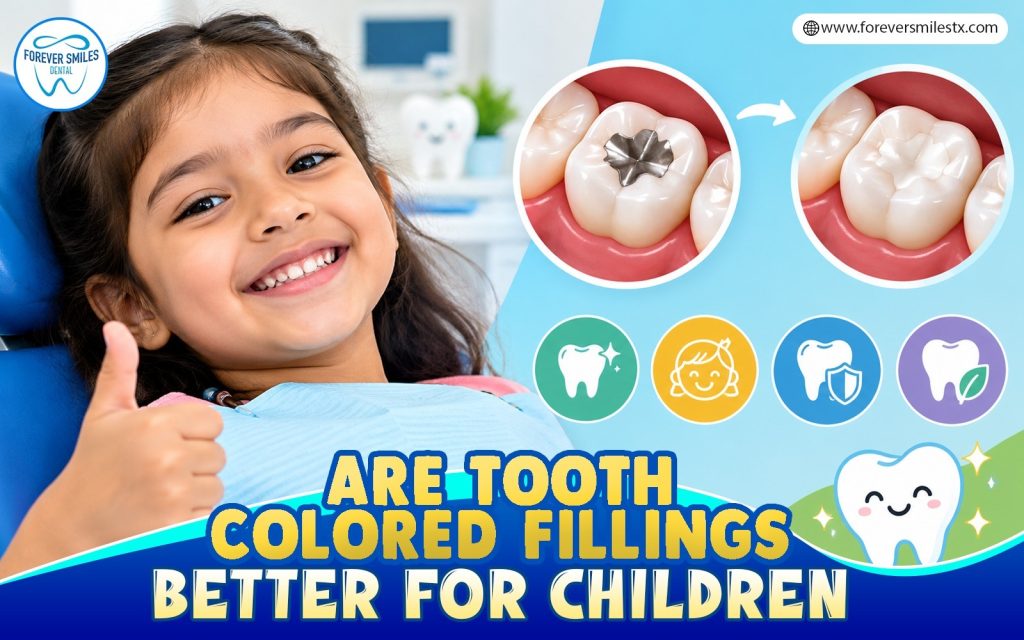
When a child needs a filling, many parents immediately wonder which option is safest, strongest, and most comfortable. Tooth-colored fillings have become a popular choice because they blend naturally with the teeth while treating cavities effectively. Along with regular Dental cleaning at Houston, good brushing habits, healthy food choices, and routine checkups can help children maintain a healthy smile. But are tooth-colored fillings actually better for children? Let’s explore how they work, their benefits, possible limitations, and what parents should know before choosing one.
What Are Tooth-Colored Fillings?
Tooth-colored fillings, also called composite fillings, are dental materials designed to repair teeth affected by cavities. Instead of leaving a noticeable silver spot, composite material can be matched closely to the natural color of the tooth. This makes the filling difficult to notice when a child smiles, talks, or laughs.
A cavity develops when bacteria and acids gradually damage the tooth. If the decay is small or moderate, a dentist may remove the damaged portion and fill the space. The purpose is not simply to improve appearance. A filling restores the shape and function of the tooth while preventing the cavity from getting worse.
Composite fillings are especially useful for children because baby teeth and developing permanent teeth need careful treatment. A dentist will consider the child’s age, the location and size of the cavity, oral hygiene habits, and the condition of the tooth before recommending a filling.
Why Are Tooth-Colored Fillings Popular for Children?
One of the biggest advantages of composite fillings is their natural appearance. Children can sometimes feel self-conscious about anything that makes their smile look different. A silver-colored filling may be visible when they laugh or speak, especially when it is placed on a front or easily seen tooth.
A tooth-colored filling blends with the surrounding enamel. This can make dental treatment feel less noticeable and may help children feel more confident about their smiles.
Another advantage is that composite fillings can bond directly to the tooth. This allows dentists to preserve more of the healthy tooth structure in many cases. Keeping as much natural tooth material as possible is important, particularly when treating young teeth.
However, “better” does not mean that composite fillings are automatically the right choice for every child. The best material depends on the individual tooth and the child’s dental needs.
1. They Look More Natural
Children are often very aware of how their teeth look. A visible silver filling can become a source of embarrassment, especially as children grow older and become more conscious of their appearance.
Composite fillings are created to resemble natural enamel. Once placed, they generally blend into the tooth instead of standing out. This is one reason many families prefer them for visible teeth.
A natural-looking restoration can also make dental treatment feel less intimidating. Instead of thinking of a filling as something that permanently changes their smile, children may simply see it as a way to repair their tooth.
For parents who are concerned about appearance, this is an important benefit.
2. They Bond With the Tooth
Composite resin can chemically and mechanically bond with tooth structure. This bonding process allows the dentist to secure the filling to the tooth rather than relying only on the shape of the cavity to hold it in place.
Because of this bonding ability, dentists may be able to remove less healthy tooth material when preparing some cavities. Preserving natural enamel and dentin is valuable because every part of a child’s tooth contributes to its strength and function.
Still, the amount of tooth structure removed depends on the cavity and the dentist’s treatment approach. Not every cavity is suitable for the same type of restoration.
3. They Can Help Preserve Healthy Tooth Structure
One important goal of children’s dentistry is to protect as much healthy tooth structure as possible. Composite fillings can support this conservative approach in suitable cases.
When a dentist treats a cavity, the decayed material must be removed. The remaining tooth then needs to be restored so the child can chew normally and the tooth can continue doing its job.
Since composite material can bond to the tooth, it may require less extensive preparation in certain situations. This can be particularly helpful when a child has a small cavity.
Parents should remember that the condition of the tooth matters more than the material alone. A large cavity may require a different restoration, even when a tooth-colored filling would look attractive.
4. They May Be More Comfortable for Some Children
Dental sensitivity can occur after a filling, regardless of the material used. Some children may experience temporary sensitivity to cold, heat, pressure, or sweet foods after treatment.
Composite fillings may produce less postoperative sensitivity for some patients, although individual experiences vary. If your child complains about discomfort after a filling, do not simply assume that it is normal. Contact the dental office and explain what your child is experiencing.
A dentist can determine whether the sensitivity is part of the normal healing process or whether the tooth needs additional attention.
This is one area where Preventive Dentistry for Kids can make a major difference. Preventing cavities in the first place means children may need fewer fillings and fewer restorative procedures.
5. They Avoid a Noticeable Metal Appearance
For years, silver-colored amalgam fillings were commonly used to restore cavities. They remain a dental treatment option in certain situations, but many parents prefer alternatives when appropriate.
Tooth-colored fillings offer an option that does not create a noticeable metallic appearance. This can be particularly useful for children who are worried about how their teeth look at school or around friends.
The choice, however, should never be based on appearance alone. Dentists also consider factors such as moisture control, cavity size, tooth location, biting pressure, and the child’s ability to cooperate during treatment.
Are Tooth-Colored Fillings Safe for Children?
Composite fillings are widely used in dentistry, including children’s dentistry. Like any dental material, they have advantages and limitations. A pediatric dentist can explain which material is appropriate based on the child’s particular situation.
Parents sometimes worry about the materials used in dental fillings. If you have concerns, ask the dentist to explain the type of composite material being recommended and why it is suitable for your child.
It is also important to remember that untreated decay can create bigger problems. A cavity that is ignored can become deeper, causing pain, infection, difficulty eating, and potentially more extensive dental treatment.
Therefore, the goal is not simply to find the “perfect” filling material. The goal is to treat the cavity properly while protecting the child’s oral health.
Are There Any Disadvantages?
Tooth-colored fillings are not perfect. Composite restorations can be sensitive to moisture during placement. Children who have difficulty keeping their mouth open or staying still may make the procedure more challenging.
Composite fillings can also wear or chip, particularly when they are placed in areas exposed to strong biting forces. Their durability depends on factors such as the size and location of the filling, the child’s bite, oral hygiene, diet, and habits such as chewing on hard objects.
The dentist may recommend another type of restoration if the cavity is particularly large or the tooth has been significantly weakened.
This is why a Pediatric dental exam is so important. A proper examination allows the dentist to look at the affected tooth and determine which treatment has the best chance of working well.
Tooth-Colored Fillings vs. Silver Fillings
Parents often ask whether composite fillings are always better than amalgam fillings. There is no universal answer.
Tooth-colored fillings have a clear cosmetic advantage and can bond with tooth structure. They may also allow conservative preparation in appropriate cases.
Amalgam fillings have historically been valued for their durability and ability to tolerate heavy chewing forces. However, they are silver in color and do not blend with natural teeth.
The right choice depends on the child, the tooth, and the extent of decay. A pediatric dentist can explain the advantages and disadvantages of each option before treatment.
Rather than asking only, “Which filling is better?” parents should ask, “Which filling is best for my child’s particular tooth?”
How Can Parents Prevent Cavities?
The best filling is often the one a child never needs. Although cavities cannot always be completely prevented, parents can take several practical steps to lower the risk.
Start with brushing twice a day using fluoride toothpaste appropriate for the child’s age. Young children may need help brushing because they often cannot clean every surface effectively on their own.
Flossing is also important because toothbrush bristles cannot reach every area between teeth. Parents should supervise younger children and teach them how to clean between their teeth properly.
Food choices matter as well. Frequent sugary snacks and drinks can increase the amount of time teeth are exposed to cavity-causing acids. Water is generally a better everyday drink than sugary beverages.
Regular dental visits are equally important. Professional cleanings remove plaque that can be difficult to eliminate at home, while examinations allow dentists to identify early signs of decay.
The Role of Preventive Dental Care
Prevention should begin before a child develops a cavity. Regular appointments allow a dental professional to monitor the development of the teeth, check the gums, discuss brushing techniques, and recommend treatments when appropriate.
Fluoride treatments may be suggested for some children. Dental sealants may also help protect the grooves and pits of permanent back teeth where food particles and bacteria can become trapped.
These measures form an important part of Preventive Dentistry for Kids because they focus on stopping dental problems before they become serious.
Parents should also pay attention to changes in their child’s mouth. Tooth sensitivity, persistent bad breath, visible spots on teeth, swelling, bleeding gums, or complaints of tooth pain should not be ignored.
Why Regular Dental Exams Matter
Children’s teeth change quickly. Baby teeth eventually make way for permanent teeth, and the jaw and bite continue developing throughout childhood.
A regular Pediatric dental exam gives the dentist an opportunity to monitor these changes. The dentist can identify cavities, check the condition of existing fillings, assess oral hygiene, and look for potential concerns with developing permanent teeth.
Routine visits can also help children become comfortable with dental care. When children visit regularly rather than only when something hurts, the dental office can become a familiar environment instead of a place associated with emergencies.
Professional Dental cleaning at Houston can also support this routine by removing plaque and helping parents understand how to improve their child’s daily oral hygiene.
What Should Parents Ask Before a Filling?
If your child needs a filling, do not hesitate to ask questions. You can ask why the filling is needed, how large the cavity is, what material is being recommended, and whether there are other treatment options.
You may also want to ask how the filling will be cared for after placement and what symptoms should prompt a follow-up visit.
If your child has allergies, sensitivities, teeth-grinding habits, or difficulty cooperating during dental procedures, tell the dentist before treatment.
The more information the dental team has, the easier it becomes to create a treatment plan suited to your child.
Can Good Habits Protect a Filling?
Yes. A filling repairs a damaged tooth, but it does not make the tooth immune to future decay. The surrounding tooth structure can still develop a new cavity.
Children should therefore continue brushing, flossing, drinking water, limiting sugary snacks, and visiting the dentist regularly after receiving a filling.
Parents should also discourage children from chewing ice, pens, pencils, or other hard objects. Such habits can place unnecessary pressure on both natural teeth and dental restorations.
Regular Preventive Dentistry for Kids remains important even after successful cavity treatment.
When Should You Take Your Child to the Dentist?
Do not wait until your child has severe tooth pain. Regular dental appointments can identify problems before they become painful or complicated.
A child should also be seen promptly if they develop a toothache, facial swelling, a broken tooth, unusual sensitivity, or difficulty chewing.
During a Pediatric dental exam, the dentist can evaluate the child’s teeth and gums and recommend treatment based on what they find.
For families looking for professional Dental cleaning at Houston, choosing a dental team experienced in treating children can make routine visits easier and more comfortable.
Final Thoughts
So, are tooth-colored fillings better for children? In many situations, they can be an excellent choice. They look natural, bond with the tooth, and may allow dentists to preserve more healthy tooth structure during treatment. They can be especially appealing for children and parents who want restorations that blend with the smile.
However, no single filling material is right for every child or every cavity. The size, location, condition of the tooth, biting forces, and the child’s individual needs all matter. The best approach is to discuss the options with a qualified pediatric dentist.