Common Local Area Oral Hygiene Problems in Children: Identifying Gum Disease and Tooth Decay
October 12, 2026
Dr. Bilkisu Idakoji
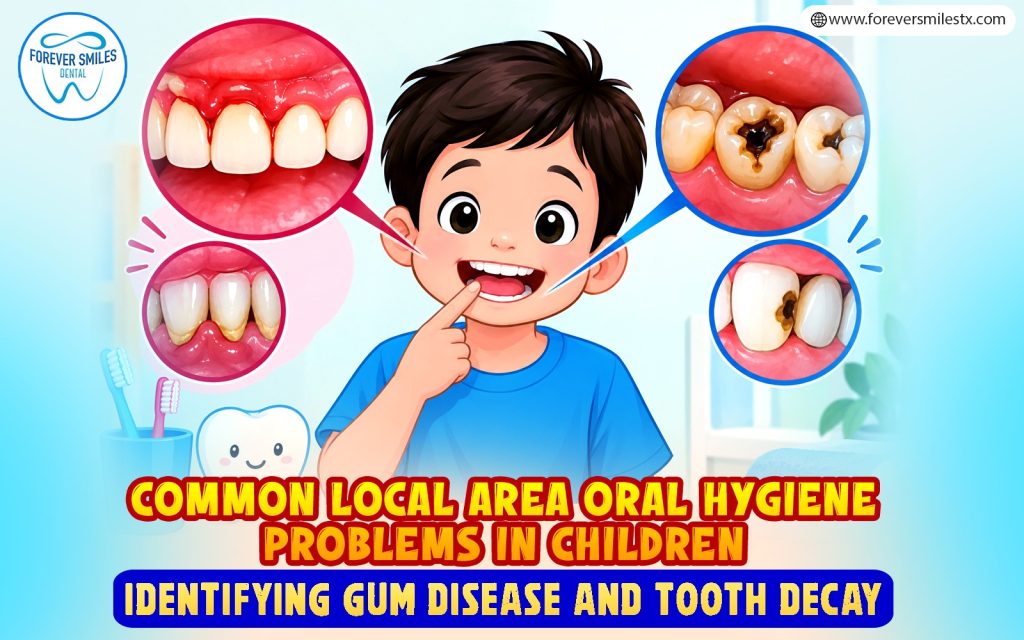
A child’s smile can tell a story about their everyday habits. From the foods they eat to the way they brush their teeth, small daily choices can have a lasting effect on oral health. Yet, problems such as cavities, plaque buildup, bad breath, and gum inflammation are common among children. Regular care and professional guidance from Forever Smiles Dental can help parents identify these concerns before they become bigger problems. Quality Kids Dentistry at Houston also focuses on prevention, early detection, and helping children feel comfortable with dental care. For children who need dental treatment in a hospital setting, Hospital dentistry may provide another option for appropriate care.
According to the Centers for Disease Control and Prevention (CDC), nearly 1 in 5 children between the ages of 5 and 11 has at least one untreated decayed tooth. Tooth decay and gum problems can cause more than discomfort. They may make it difficult for children to eat, sleep, speak, concentrate in class, or enjoy their favorite activities. The good news is that many childhood oral health problems can be prevented when parents know what to look for and establish healthy routines early.
Why Children’s Oral Hygiene Deserves Attention
Children’s mouths change constantly as they grow. Baby teeth appear, jaws develop, permanent teeth begin to replace primary teeth, and oral habits evolve along the way. Because of these changes, children need more than occasional reminders to brush.
Young children may not have the coordination to clean every surface of their teeth properly. They may also brush for only a few seconds, forget to floss, swallow toothpaste, or avoid brushing certain areas because they feel uncomfortable.
Parents play an important role during these early years. Supervising brushing, choosing healthy snacks, arranging regular dental visits, and setting a good example can make oral hygiene a normal part of a child’s routine rather than a daily battle.
The goal is not simply to keep teeth looking clean. Good oral hygiene helps control plaque, protect enamel, support healthy gums, and reduce the risk of painful dental problems.
The Most Common Oral Hygiene Problems in Children
Several oral health concerns can appear during childhood. Some are easy to notice, while others may develop quietly.
Common problems include:
- Tooth decay and cavities
- Gingivitis or gum inflammation
- Plaque and tartar buildup
- Persistent bad breath
- Tooth sensitivity
- Enamel wear
- Dental infections
- Early loss of baby teeth because of severe decay
- Problems caused by frequent sugary drinks and snacks
Among these, gum disease and tooth decay deserve particular attention because they can become more serious when treatment is delayed.
Understanding Gum Disease in Children
Many parents associate gum disease with adults, but children can experience gum problems as well. The earliest and most common form is gingivitis. It occurs when plaque accumulates around the teeth and along the gumline.
Plaque contains bacteria. When it is not removed through regular brushing and flossing, the gums can become irritated. They may look red, swollen, or tender and may bleed during brushing.
Gingivitis does not necessarily mean a child has severe gum disease. However, it is a signal that something needs attention. Ignoring persistent inflammation can allow oral health problems to become more difficult to manage.
Signs Parents Should Watch For
Knowing the warning signs can help parents respond early.
1. Red or swollen gums
Healthy gums generally appear firm and pink. Gums that frequently look red, puffy, or irritated may need professional evaluation.
2. Bleeding while brushing
A small amount of bleeding should not simply be dismissed as normal. Frequent bleeding can indicate gum inflammation, particularly when it happens during routine brushing or flossing.
3. Persistent bad breath
Morning breath is normal, but bad breath that continues throughout the day despite brushing may be associated with plaque, food particles, gum inflammation, or another oral health concern.
4. Tender gums
Children may complain that their gums hurt while brushing or eating. Some may avoid brushing the affected area because it feels uncomfortable.
5. Receding gums
Gum recession is less common in children than simple gingivitis, but when it occurs, it deserves attention. Parents who notice that a tooth appears unusually long or that the gumline has changed should consult a dental professional.
Why Do Children Develop Gum Problems?
The most common reason is plaque accumulation. However, several factors can contribute to gum irritation.
Poor brushing technique is one possibility. A child may brush regularly but still miss the gumline or areas between the teeth. Orthodontic appliances can also make cleaning more challenging.
Diet matters too. Frequent consumption of sugary foods and drinks can encourage bacterial activity in the mouth. Certain habits, inadequate dental care, and some underlying conditions can also affect gum health.
The solution begins with identifying the cause rather than simply treating the visible symptoms.
Tooth Decay: A Common Childhood Problem
Tooth decay happens when bacteria in dental plaque use sugars from food and drinks to produce acids. Over time, repeated acid attacks can weaken tooth enamel and create cavities.
Children can be particularly vulnerable because they may frequently snack throughout the day. A child who drinks juice, soda, sweetened beverages, or flavored drinks regularly may expose their teeth to sugar and acid many times.
Baby teeth are important even though they eventually fall out. They help children chew food, support speech development, and maintain space for permanent teeth. Severe decay in a baby tooth can therefore create problems beyond a simple cavity.
Early Signs of Tooth Decay
Tooth decay does not always begin with obvious pain. Parents should look for:
- White or chalky spots on teeth
- Brown or dark discoloration
- Small pits or holes
- Sensitivity to cold or sweet foods
- Pain while chewing
- Food getting trapped in a particular tooth
- Persistent bad breath
- Swelling around a tooth
- Complaints of toothache
If a child begins avoiding certain foods or chewing on only one side of the mouth, parents should pay attention. Children do not always explain dental discomfort clearly, especially when they are young.
What Causes Cavities in Children?
Frequent Sugary Snacks
Candy, cookies, cakes, sweetened cereals, and other sugary foods can contribute to tooth decay, especially when eaten frequently.
The issue is not only how much sugar a child consumes but also how often the teeth are exposed to it.
Sugary Drinks
Juices, soft drinks, sports drinks, flavored milk, and other sweetened beverages can increase the risk of cavities. Allowing a child to sip a sugary drink for long periods can repeatedly expose the teeth to sugar and acid.
Water is generally a better everyday drink for keeping children hydrated.
Inadequate Brushing
Children may rush through brushing or miss difficult-to-reach areas. Parents should supervise younger children and help them develop an effective technique.
Skipping Flossing
A toothbrush cannot thoroughly clean the tight spaces between teeth. Flossing helps remove food particles and plaque from these areas.
Insufficient Fluoride Exposure
Fluoride strengthens tooth enamel and helps make teeth more resistant to acid attacks. Children should use fluoride toothpaste appropriately for their age, following professional guidance.
How Parents Can Build Better Oral Hygiene Habits
Good oral care does not have to feel like a chore. Children respond well when routines are simple, predictable, and engaging.
Make Brushing a Family Activity
Instead of simply telling a child to brush, parents can brush their own teeth at the same time. Children naturally learn by observing adults.
Use a Two-Minute Routine
Encourage children to brush for approximately two minutes, twice a day. A timer, song, or child-friendly brushing app can make the process more enjoyable.
Teach Children to Clean Every Surface
Children should learn to brush the outer, inner, and chewing surfaces of their teeth. The gumline should also receive gentle attention.
Introduce Flossing Early
Once two teeth touch each other, cleaning between them becomes important. Parents may need to floss for younger children until they develop the coordination to do it themselves.
Choose Tooth-Friendly Snacks
Instead of making sweets a regular snack, offer options such as fresh fruits, vegetables, plain or low-sugar yogurt, cheese, and other nutritious foods.
Make Water the Everyday Choice
Water can help rinse away food particles and is a simple alternative to sugary beverages.
Why Regular Dental Visits Matter
One of the biggest mistakes parents can make is waiting for a child to complain of pain before scheduling a dental appointment.
A child can have an early cavity without experiencing discomfort. By the time pain develops, the problem may already be more advanced.
Regular dental visits allow professionals to monitor changes in the teeth and gums, identify early signs of decay, provide preventive care, and educate families about better home routines. Kids Dentistry at Houston can be especially valuable for creating positive dental experiences while addressing age-specific oral health needs.
Dental appointments also give children an opportunity to become familiar with the dental environment. A child who regularly visits the dentist may be less anxious about dental care later.
When Hospital Dentistry May Be Considered
Most children can receive routine dental care in a standard dental office. However, some children may require additional support because of extensive treatment needs, special circumstances, severe anxiety, or difficulty cooperating with conventional dental procedures.
In appropriate cases, Hospital dentistry may allow dental professionals to provide care in a controlled medical environment. The specific approach depends on the child’s age, overall circumstances, treatment requirements, and professional assessment.
Parents should discuss available options with their child’s dental provider rather than assuming that hospital-based treatment is necessary.
The Community Side of Children’s Oral Health
A child’s oral health is influenced by more than brushing habits. Access to dental care, family income, transportation, education, diet, and availability of pediatric dental services can all affect outcomes.
Some families may delay dental visits because they are concerned about cost or do not know where to find appropriate services. Others may live in areas where access to pediatric dental providers is limited.
Community dental programs, school-based screenings, public health initiatives, and insurance programs can help address some of these barriers.
Parents should also feel comfortable asking dental offices about payment options, insurance coverage, preventive programs, and available resources.
How Schools Can Support Healthy Smiles
Children spend a large part of their day at school, making schools an important place for oral health education.
Simple classroom lessons can teach children why brushing matters, how sugar affects teeth, and why dental visits are important. Where available, school-based dental screenings and preventive programs can also help identify children who may need professional care.
Teachers and parents can work together to make oral health part of a child’s broader understanding of personal hygiene.
When Should Parents Contact a Dentist?
Parents should consider contacting a dental professional if a child experiences:
- Persistent tooth pain
- Swollen gums
- Bleeding gums that continue regularly
- Facial or gum swelling
- Sensitivity that does not go away
- A visible cavity
- A broken or damaged tooth
- Persistent bad breath
- Difficulty chewing
- A loose baby tooth that appears unusual
- Signs of infection
Dental emergencies involving significant swelling, severe pain, bleeding, or injury require prompt professional attention.
Turning Dental Care Into a Lifelong Habit
Children do not develop excellent oral hygiene overnight. Habits are built through repetition.
A child who learns that brushing happens every morning and evening is more likely to continue that routine as they grow. A child who understands that sugary snacks are occasional treats may also develop healthier eating patterns.
Parents do not need to make oral care complicated. Consistency is often more important than perfection. Two daily brushing sessions, regular cleaning between teeth, sensible food choices, fluoride protection when appropriate, and routine dental examinations can make a meaningful difference.
Professional guidance from Forever Smiles Dental can also help families understand what their children need at different stages of development.
A Healthy Smile Starts Before Problems Appear
The best way to deal with childhood dental problems is to prevent them whenever possible. Parents should not wait until a child has a painful cavity or visibly swollen gums to start paying attention to oral hygiene.
Watch for changes. Ask children how their teeth feel. Check their brushing routine. Limit frequent sugary snacks and drinks. Encourage water and nutritious foods. Most importantly, make dental visits a normal part of growing up.
For families looking for professional guidance, Kids Dentistry at Houston can support children through different stages of dental development, from their first teeth to their growing permanent smile.
When a child’s treatment needs require a different setting, Hospital dentistry can also be discussed with a qualified dental professional to determine whether it is appropriate.
Conclusion
Gum disease and tooth decay may be common childhood oral health concerns, but they are not problems parents have to simply accept. Early attention, daily brushing, flossing, balanced eating habits, fluoride protection, and regular dental examinations can significantly reduce many preventable dental problems. The key is to focus on prevention before discomfort begins.
By making oral hygiene part of everyday family life, parents can help children understand that healthy teeth are something worth protecting. Support from Forever Smiles Dental and appropriate options such as Hospital dentistry when clinically necessary can give families the guidance they need to protect children’s smiles today and support better oral health for years to come.