The First Signs of Shark Teeth in Children Every Parent Should Know
July 31, 2026
Dr. Bilkisu Idakoji
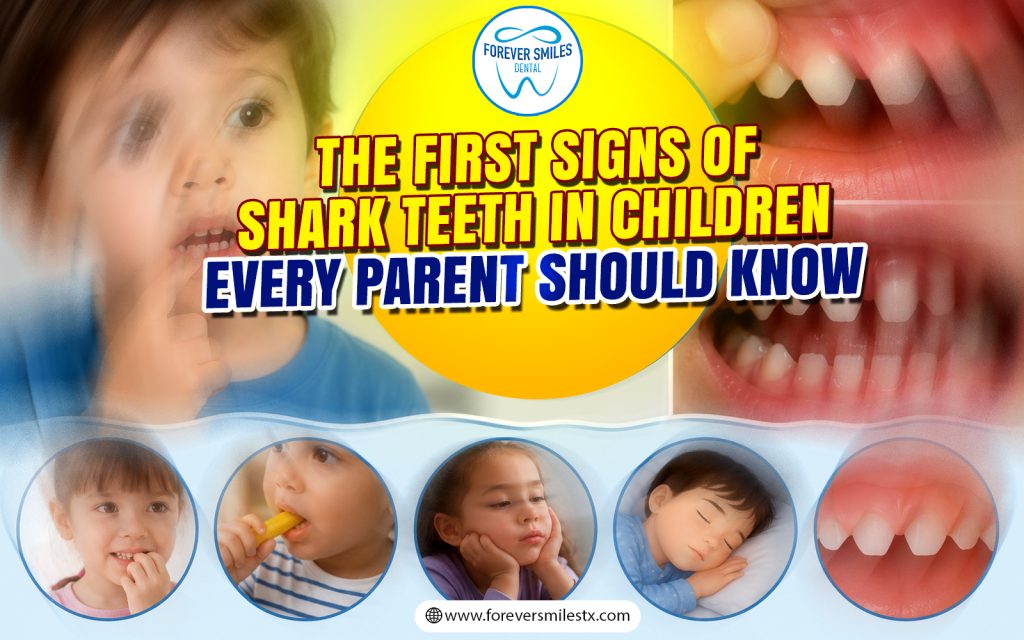
Most parents expect their child’s baby teeth to become loose, fall out, and then make way for permanent teeth. So, seeing a new tooth growing behind a baby tooth can be surprising—even alarming. It may look like your child suddenly has two rows of teeth, giving the appearance of a shark’s mouth. This common dental condition is often called shark teeth.
While the sight can be unsettling, shark teeth are not always a cause for concern. In many cases, they are simply part of your child’s natural dental development. However, recognizing the early signs can help you determine whether the situation is progressing normally or if your child should be evaluated by a pediatric dentist.
This guide explains what shark teeth are, why they happen, and the first signs every parent should know to help keep their child’s smile healthy.
What Are Shark Teeth in Children?
Shark teeth occur when a permanent tooth begins to erupt before the corresponding baby tooth has fallen out. Instead of replacing the baby tooth in its usual position, the adult tooth often emerges behind it, creating two visible rows of teeth.
The nickname comes from sharks, which naturally have multiple rows of teeth. Although children don’t actually develop multiple permanent rows, the temporary appearance can look very similar.
Shark teeth are relatively common during childhood and are often seen during the transition from primary (baby) teeth to permanent teeth.
How Normal Tooth Eruption Happens
Understanding normal tooth development makes it easier to recognize when something looks different.
Typically, the roots of baby teeth gradually dissolve as permanent teeth begin developing underneath them. This natural process causes the baby teeth to loosen over time until they eventually fall out.
Once the baby tooth is gone, the permanent tooth erupts into the empty space and slowly moves into its correct position.
This sequence usually happens smoothly, but sometimes the permanent tooth follows a slightly different path. When that occurs before the baby tooth becomes loose enough to fall out, shark teeth can develop.
Why Shark Teeth Develop
Several factors can contribute to this condition. In most children, it is simply a variation of normal dental development.
Permanent Teeth Take a Different Path
Permanent teeth don’t always grow directly beneath baby teeth. Occasionally, they erupt slightly behind or inside the dental arch, making them visible before the baby tooth is ready to come out. This is one of the most common reasons shark teeth appear.
Baby Teeth Stay in Place Longer
Sometimes the roots of baby teeth don’t dissolve as quickly as expected. As a result, the baby tooth remains firmly attached while the permanent tooth continues erupting. The permanent tooth eventually finds another path, usually behind the existing tooth.
Genetics and Jaw Development
Some children naturally have less space in their jaws during tooth development. Genetics may also influence how and when permanent teeth erupt. A smaller jaw or mild crowding doesn’t necessarily cause shark teeth, but it can increase the chances of them occurring.
Every Child Develops Differently
Children lose baby teeth at different ages. Some may experience shark teeth even when their dental development is perfectly healthy.
This is why dentists evaluate each child individually rather than relying only on age.
The First Signs of Shark Teeth Every Parent Should Know
Knowing what to look for allows parents to act early if necessary.
A Second Row of Teeth Appears
The clearest sign is noticing another tooth growing directly behind the baby tooth instead of replacing it. Many parents discover this while helping their child brush or during routine bedtime brushing. At first, the permanent tooth may only be partially visible, appearing as a small white edge emerging through the gums. As it continues erupting, the second row becomes more noticeable.
Baby Teeth Are Still Firm
One of the biggest clues is that the baby tooth hasn’t become loose even though the permanent tooth is already visible. Normally, a baby tooth should wiggle before an adult tooth erupts. If the baby tooth feels solid while another tooth grows behind it, it may be worth monitoring closely.
Permanent Teeth Become Visible First
Sometimes parents notice the permanent tooth before realizing the baby tooth hasn’t loosened. Instead of seeing a gap where a baby tooth recently fell out, they notice a brand-new tooth already emerging behind the existing one. This unusual eruption pattern often leads parents to schedule their child’s first evaluation.
Mild Gum Swelling
As permanent teeth push through the gums, children may experience minor swelling or redness around the eruption site. This inflammation is usually temporary and part of the normal eruption process. The gums may appear slightly raised where the new tooth is emerging.
Changes in Your Child’s Bite
Some children begin biting differently after a second row of teeth appears. They may notice that their front teeth don’t meet the same way they did before. While this doesn’t always indicate a serious problem, any noticeable bite changes should be observed carefully.
Difficulty Biting Certain Foods
Children with shark teeth sometimes find it harder to bite into foods like apples, sandwiches, or pizza. This usually happens because the baby tooth and permanent tooth are occupying the same area, temporarily affecting how the teeth come together. Many children adapt quickly, while others may avoid certain foods until the baby tooth falls out.
Food Gets Stuck More Easily
Extra teeth in the same area create additional spaces where food particles can collect. Parents may notice their child spending longer brushing or flossing around the affected teeth. Food trapped between overlapping teeth can increase plaque buildup if not cleaned properly. Maintaining good oral hygiene during this stage is especially important.
More Plaque Around Crowded Teeth
When two teeth occupy nearly the same position, cleaning becomes more challenging. Plaque may accumulate more easily around the gumline and between the teeth. Parents should supervise brushing carefully, paying extra attention to the crowded area to reduce the risk of cavities and gum irritation.
Your Child Keeps Touching the Tooth
Children are naturally curious about changes in their mouths. A child with shark teeth may repeatedly use their tongue to feel the new tooth because it feels different or unfamiliar. They may also mention that something “feels funny” or “feels weird” behind their baby tooth. Although this behavior is common, it can be one of the earliest clues that a permanent tooth has started erupting.
Your Child Says Their Mouth Feels Different
Not every child experiences pain, but many notice subtle changes.
They might describe:
- Feeling an extra tooth
- A rough edge behind the baby tooth
- Pressure while chewing
- A strange sensation when speaking
- Mild tenderness around the gums
These comments should encourage parents to take a closer look inside the child’s mouth.
Are Shark Teeth Painful?
Fortunately, shark teeth are usually not painful. Most children experience little more than mild pressure as the permanent tooth erupts. Some may have slight gum tenderness for a few days, while others don’t notice any discomfort at all.
However, parents should pay attention if their child experiences:
- Persistent pain
- Significant swelling
- Difficulty eating
- Bleeding around the gums
- Signs of infection
- Fever or severe discomfort
These symptoms are not typical of simple shark teeth and should be evaluated by a dentist.
In most cases, children continue eating, speaking, and playing normally despite having two rows of teeth for a short period. Understanding these early signs helps parents distinguish between normal tooth development and situations that may require professional care. In the next section, we’ll discuss when shark teeth are considered normal, when it’s time to visit the dentist, available treatment options, and what parents can expect moving forward.
When Shark Teeth Are Normal and When They Are Not
One of the biggest concerns parents have is whether shark teeth are a normal part of growing up or a sign that something is wrong.
The good news is that many cases are completely normal and resolve without extensive treatment. However, there are situations where professional dental care is the best course of action.
Situations That Are Usually Normal
In many children, the permanent tooth gradually pushes the baby tooth loose over the following weeks. As the baby tooth naturally falls out, the tongue and normal chewing forces often help guide the permanent tooth into a better position.
Your child may simply need regular monitoring if:
- The baby tooth has already started to loosen.
- The permanent tooth has only recently appeared.
- There is no pain or infection.
- Your child is eating and speaking normally.
- The permanent tooth continues moving forward over time.
Patience is often all that’s needed during this stage.
Signs That Need a Dental Evaluation
While shark teeth aren’t always an emergency, some situations shouldn’t be ignored.
Schedule a dental visit if:
- The baby tooth remains firmly in place for several weeks after the permanent tooth appears.
- The permanent tooth continues erupting behind the baby tooth without improvement.
- Your child experiences pain, swelling, or bleeding.
- Chewing becomes difficult.
- The teeth appear severely crowded.
- You notice changes in your child’s bite.
- Your child complains of ongoing discomfort.
An early evaluation allows the dentist to determine whether intervention is necessary before crowding becomes more significant.
How Dentists Diagnose Shark Teeth
Diagnosing shark teeth is usually straightforward.
Clinical Examination
The dentist begins by examining your child’s mouth to assess:
- The position of the permanent tooth
- Whether the baby tooth is loose
- Available space in the dental arch
- Overall bite development
- Gum health
This examination often provides enough information to decide on the next steps.
When Dental X-Rays May Be Needed
In some cases, dental X-rays help evaluate what’s happening beneath the gums.
They allow the dentist to see:
- The position of developing permanent teeth
- Remaining baby tooth roots
- Available jaw space
- Tooth alignment
- Whether additional permanent teeth are erupting normally
X-rays are only recommended when they provide valuable diagnostic information.
Treatment Options for Shark Teeth
Treatment depends on your child’s age, the position of the teeth, and whether the baby tooth is loosening as expected.
Monitoring the Situation
Many children simply need observation. If the baby tooth is already becoming loose, the dentist may recommend waiting several weeks before considering treatment. Regular follow-up visits ensure the permanent tooth continues moving in the right direction. Observation is often the least invasive and most appropriate approach.
Baby Tooth Extraction
If the baby tooth remains firmly attached and blocks the permanent tooth’s path, the dentist may recommend removing it. This is a common procedure that is generally quick and well tolerated by children. Removing the baby tooth creates room for the permanent tooth to continue erupting. Parents are often surprised by how smoothly children recover afterward.
What Happens After Extraction?
One common question is whether the permanent tooth will automatically move into place. In many younger children, the answer is yes. Once the baby tooth is removed, the tongue, lips, cheeks, and normal chewing forces help guide the permanent tooth toward its proper position over the following weeks or months. Regular monitoring ensures the tooth continues improving naturally.
Will Orthodontic Treatment Be Needed?
Not every child with shark teeth will need braces or orthodontic treatment.
However, orthodontic evaluation may be recommended if:
- Significant crowding is present.
- The permanent tooth doesn’t move into place.
- Bite problems develop.
- There isn’t enough space for future permanent teeth.
- Other alignment concerns are identified.
Early evaluation allows any future treatment to be planned at the most appropriate time.
Can Shark Teeth Be Prevented?
Parents often ask whether they could have done something differently. In most cases, the answer is no. Shark teeth usually occur because of the natural timing and direction of tooth eruption, factors that parents cannot control.
However, healthy dental habits can help ensure that any concerns are identified early.
Helpful preventive measures include:
- Regular dental checkups
- Daily brushing with fluoride toothpaste
- Daily flossing
- Eating a balanced diet
- Limiting sugary snacks and drinks
- Monitoring loose baby teeth as permanent teeth begin to erupt
Although these habits won’t prevent shark teeth, they support overall oral health and allow dentists to monitor your child’s developing smile.
Final Thoughts
Seeing two rows of teeth in your child’s mouth can certainly be unexpected, but shark teeth are often a normal part of growing up. Understanding the first signs, such as a permanent tooth erupting behind a baby tooth, delayed loosening of baby teeth, mild gum swelling, or changes in chewing, can help parents recognize the condition early.
While many cases resolve naturally, timely dental evaluations ensure that retained baby teeth, crowding, or bite concerns don’t interfere with healthy smile development. The earlier any issues are identified, the easier they are often to manage.
At Forever Smiles Dental, we understand that every stage of your child’s dental development comes with new questions. Our compassionate team is here to monitor tooth eruption, answer your concerns, and recommend the most appropriate care to help your child’s permanent teeth come in as healthy and properly aligned as possible.
If you’ve noticed a second row of teeth or have concerns about how your child’s permanent teeth are coming in, schedule a visit with Forever Smiles Dental. Early guidance can make all the difference in protecting your child’s healthy, confident smile for years to come.