High-Arched Palate in Children: Signs, Causes, Diagnosis, and Why Early Recognition Matters
August 25, 2026
Dr. Bilkisu Idakoji
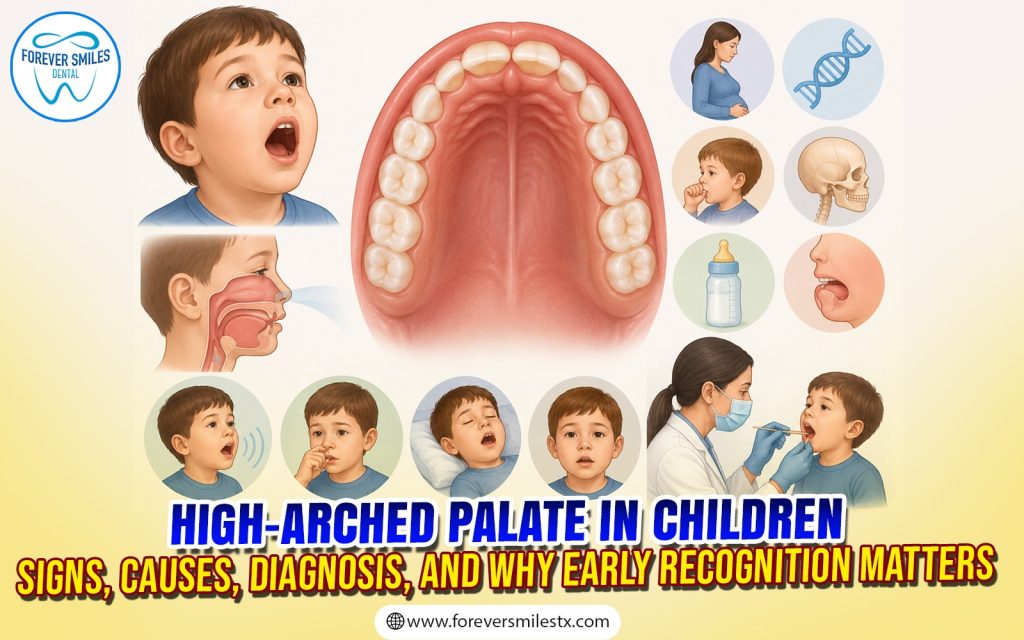
When parents think about their child’s oral health, they usually focus on teeth, whether they’re coming in on time, if they’re straight, or whether cavities are developing. However, another important part of the mouth often goes unnoticed: the palate, or the roof of the mouth.
The shape of the palate plays a key role in how a child’s mouth develops. It helps support the upper teeth, forms the floor of the nasal cavity, and influences how the tongue fits inside the mouth. If the palate develops differently than expected, it may affect other aspects of oral development as your child grows.
One variation that dentists sometimes identify is a high-arched palate. While many children with a high palate experience no immediate problems, recognizing it early allows dental professionals to monitor growth and identify any concerns that may arise over time.
In this guide, we’ll explain what a high-arched palate is, why it develops, and the signs parents should know so they can better understand their child’s developing smile.
What Is a High-Arched Palate?
A high-arched palate, also called a high-vaulted palate, refers to a roof of the mouth that is taller and narrower than average.
Normally, the palate has a broad, gently curved shape that provides adequate space for the tongue while supporting the upper dental arch. In a child with a high-arched palate, the roof of the mouth rises more steeply, creating a deeper arch. The difference may be subtle or more noticeable depending on the child.
Because the palate sits inside the mouth, parents often don’t realize it has a different shape until it is pointed out during a dental examination.
Understanding the Anatomy of the Palate
The palate consists of two sections:
- The hard palate, located at the front of the mouth, is made of bone and forms the sturdy roof of the oral cavity.
- The soft palate, located farther back, is made of muscle and soft tissue and helps with swallowing and speaking.
When dentists discuss a high-arched palate, they are referring primarily to the shape of the hard palate.
Its size, width, and height influence how the upper teeth are positioned and how the tongue rests inside the mouth.
How Is a High-Arched Palate Different From Typical Palate Development?
Every child’s mouth is unique. Some palates are naturally wider, while others are slightly narrower. A high-arched palate is generally characterized by increased height combined with reduced width.
Instead of forming a broad arch across the roof of the mouth, the palate appears more peaked. This narrower shape may leave less room for developing permanent teeth or affect how different oral structures fit together. However, not every narrow palate causes functional problems.
Is It a Medical Condition or a Normal Variation?
Parents often ask whether a high-arched palate is considered abnormal. The answer depends on the individual child. Some children simply have a naturally higher palate without experiencing any oral health concerns.
For others, a high-arched palate may occur alongside other developmental differences involving the teeth, jaws, or bite. Rather than treating the palate shape itself as the problem, dentists evaluate how it relates to the child’s overall oral development.
How Does the Palate Develop?
The palate begins forming very early during pregnancy.
Before birth, different facial structures gradually grow and join together to create the roof of the mouth. Once a child is born, development continues throughout childhood as the upper jaw grows and permanent teeth begin to emerge. The palate doesn’t remain exactly the same shape as a child grows.
It gradually changes in size and width while supporting:
- Developing permanent teeth
- The upper dental arch
- Tongue posture
- Jaw growth
- Overall facial development
Because growth continues for many years, dentists routinely monitor changes in palate development during childhood.
Growth Before Birth
During fetal development, the two sides of the palate fuse together to create a continuous roof of the mouth. This process is highly coordinated and forms the foundation for future oral development.
Although most children experience normal palate formation, natural differences in growth can result in variations in palate shape and size.
Changes During Childhood
The upper jaw widens as children grow. Baby teeth eventually give way to permanent teeth, requiring additional room within the dental arches.
The palate grows alongside these changes, adapting to the developing mouth. Growth patterns differ from one child to another, which is why no two palates look exactly alike.
How the Palate Supports Oral Development
The palate serves several important purposes beyond simply separating the mouth from the nose.
It helps:
- Support the upper teeth
- Guide the eruption of permanent teeth
- Provide space for the tongue
- Maintain the shape of the upper dental arch
- Contribute to normal jaw development
Because it interacts with many different oral structures, dentists consider palate shape when evaluating overall dental development.
What Causes a High-Arched Palate?
A high-arched palate rarely develops because of one single factor. Instead, it often results from a combination of inherited traits, facial growth patterns, and developmental influences.
Genetics and Inherited Facial Features
Genetics plays one of the largest roles in determining the size and shape of the palate. Children often inherit facial characteristics similar to their parents, including jaw width, palate height, and dental arch shape.
Having a family history of narrow jaws or crowded teeth does not guarantee a child will develop a high-arched palate, but it may increase the likelihood.
Developmental Factors
Every child grows at a different pace.Natural variations during facial growth may influence how the palate develops throughout childhood. Some children simply develop a palate that is naturally higher than average without any identifiable medical cause.
Mouth Breathing and Airway Influences
Researchers continue studying the relationship between breathing patterns and facial development.
Some evidence suggests that long-term mouth breathing may influence the growth of the upper jaw and palate. Children who consistently breathe through their mouths because of allergies, enlarged tonsils, or chronic nasal congestion may develop different facial growth patterns over time. Because many medical conditions can contribute to mouth breathing, these concerns should be evaluated by the appropriate healthcare providers rather than assumed to be caused solely by palate shape.
Long-Term Oral Habits
Certain childhood habits may influence oral development.
These include:
- Prolonged thumb sucking
- Extended pacifier use
- Persistent tongue habits
These habits do not automatically cause a high-arched palate, but they may contribute to changes in tooth position or jaw development in some children.
How Can Parents Recognize a High-Arched Palate?
Because the roof of the mouth isn’t something parents usually examine, many cases are first identified during routine dental visits. Still, there are several signs that may prompt a closer look.
Looking at the Roof of the Mouth
If your child opens wide, you may notice that the roof of the mouth appears unusually narrow or rises higher than expected.
Unlike a broad, gently curved palate, a high-arched palate often has a deeper, steeper appearance. Because this difference can be subtle, comparison with another child’s mouth is not a reliable way to judge normal development.
A Narrow Upper Dental Arch
The upper row of teeth may appear narrower than the lower arch. Instead of forming a wide curve, the upper teeth may look more closely grouped together. This doesn’t confirm a high-arched palate by itself, but it is one feature dentists commonly evaluate.
Crowded Upper Teeth
As permanent teeth begin erupting, limited space within a narrower upper arch may contribute to crowding. Parents may notice:
- Teeth overlapping
- Rotated permanent teeth
- Teeth erupting slightly inside or outside the dental arch
Crowding alone does not diagnose a high-arched palate, but it may occur alongside one.
Difficulty Cleaning Certain Areas
When teeth are crowded or closely positioned, brushing and flossing can become more challenging. Parents may notice plaque collecting around overlapping teeth or difficulty reaching certain areas during brushing.
Maintaining excellent oral hygiene becomes especially important as permanent teeth continue erupting.
How Dentists Diagnose a High-Arched Palate
A high-arched palate is usually identified during a routine dental examination rather than through a single symptom. Since every child’s mouth develops differently, dentists evaluate the palate as part of the overall picture of oral growth instead of looking at it in isolation.
The goal is to understand whether the palate’s shape is simply a natural variation or whether it may be contributing to other developmental concerns.
Clinical Examination
The first step is a careful visual examination of your child’s mouth.
The dentist will assess:
- The height and width of the palate
- The shape of the upper dental arch
- The position of the tongue at rest
- How the upper and lower teeth come together
- The amount of space available for permanent teeth
This examination also helps identify any changes that may occur as your child grows.
Evaluating Tooth Eruption
The timing and position of erupting permanent teeth provide valuable information.
A dentist may look for signs such as:
- Delayed eruption
- Teeth erupting outside the dental arch
- Crowding developing in the upper jaw
- Changes in spacing between teeth
Observing these patterns over time helps determine whether the palate is influencing dental development.
Assessing Jaw Growth
A child’s upper and lower jaws continue developing throughout childhood. During routine visits, the dentist monitors how the jaws are growing in relation to one another. This allows them to identify changes that could affect the bite or the alignment of permanent teeth in the future.
Growth assessments are especially valuable during the mixed dentition stage, when both baby and permanent teeth are present.
When Imaging May Be Helpful
Sometimes, a visual examination provides all the information needed. In other situations, dental X-rays or digital imaging may be recommended to evaluate:
- Developing permanent teeth
- Tooth position beneath the gums
- Available space within the jaw
- Overall dental development
These images help dentists understand what cannot be seen during a routine oral examination and support informed treatment planning when necessary.
How Is a High-Arched Palate Managed?
Management varies depending on the child’s age, stage of growth, and overall oral development. There is no single treatment that applies to every child.
Observation During Growth
For many children, careful monitoring is the most appropriate approach. Routine dental visits allow the dentist to compare growth over time and identify any meaningful changes as permanent teeth continue erupting.
Orthodontic Evaluation
If the dentist observes developing crowding, changes in bite relationships, or limited space for permanent teeth, an orthodontic evaluation may be recommended. This evaluation helps determine whether any future orthodontic care could improve the alignment and function of the developing bite.
An orthodontic consultation does not necessarily mean treatment will begin immediately.
Individualized Treatment Planning
Every child’s mouth develops differently. Treatment recommendations are based on factors such as:
- Age
- Dental development
- Jaw growth
- Tooth eruption
- Bite relationships
- Available space
This personalized approach ensures that care is appropriate for the child’s specific needs rather than based solely on the appearance of the palate.
Why Choose Forever Smiles Dental?
At Forever Smiles Dental, we understand that every child develops at their own pace. Our goal is to monitor your child’s smile as it grows, helping parents understand what is expected and what may benefit from closer attention.
Dr. B provides gentle, compassionate care while evaluating more than just teeth. During each visit, we assess how your child’s teeth, jaws, and bite are developing, allowing us to identify concerns early and recommend care based on your child’s individual needs.
We also believe that parents should feel informed and confident about their child’s oral health. That’s why we take the time to answer questions, explain our findings, and guide families through every stage of dental development.
To make quality dental care accessible, Forever Smiles Dental offers an In-House Dental Insurance Plan and accepts CareCredit and LendingClub, helping families receive timely care without unnecessary financial barriers.
Final Thoughts
A high-arched palate is often discovered by chance during a dental examination, but understanding what it means can help parents feel more confident about their child’s oral health.
While many children with a high-arched palate experience normal dental development, others may benefit from regular monitoring as their permanent teeth, jaws, and bite continue to grow. The shape of the palate is just one part of the bigger picture, and evaluating it alongside tooth eruption, spacing, and jaw development provides the most complete understanding of your child’s smile.
If you’ve noticed changes in your child’s upper arch, crowding, or you’ve been told they have a high-arched palate, scheduling a dental evaluation is a proactive step. At Forever Smiles Dental, we’re committed to helping children build healthy, functional smiles through personalized care, early observation, and guidance tailored to every stage of growth.