Scissor Bite in Children: The Rare Bite Problem Parents Often Overlook
August 11, 2026
Dr. Bilkisu Idakoji
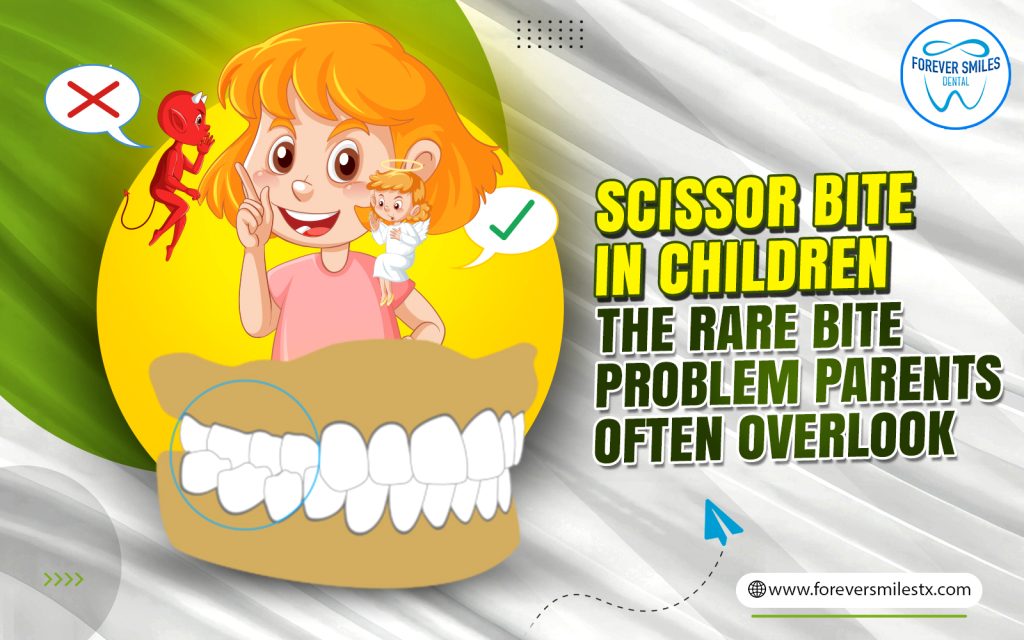
Parents often notice obvious changes in their child’s smile, a crooked front tooth, a gap, or a tooth coming in where it shouldn’t. But some orthodontic problems are much harder to spot simply by looking at the front of the mouth. A scissor bite is one of them.
This uncommon bite problem usually involves the back teeth and may go unnoticed because a child’s smile can look perfectly normal from the front. In some cases, there may not even be pain or an obvious complaint. The first clue may be something subtle, such as a child consistently chewing on one side or repeatedly biting the inside of their cheek.
Understanding what a scissor bite looks like and recognizing its early signs can help parents seek an evaluation before the problem begins affecting chewing, tooth wear, or jaw development.
What Is a Scissor Bite in Children?
A scissor bite is a type of malocclusion, which simply means the upper and lower teeth do not fit together correctly when the mouth closes.
In a healthy bite, the upper back teeth sit slightly outside the lower back teeth, but their chewing surfaces still make proper contact. With a scissor bite, the upper back teeth sit too far toward the cheek, while the corresponding lower teeth may sit too far inward toward the tongue. As a result, the chewing surfaces of these teeth may have little contact or may not meet at all.
Imagine the two blades of a pair of scissors sliding past each other rather than meeting directly. That overlapping relationship is where the condition gets its name. Because scissor bites commonly affect the premolars or molars at the sides and back of the mouth, parents may not immediately see anything unusual.
What Causes a Scissor Bite in Children?
There isn’t one single reason every child develops a scissor bite. The problem can involve the position of individual teeth, differences in jaw or dental arch development, or a combination of factors.
Jaw Growth and Development
The upper and lower jaws need to develop in a coordinated way for the teeth to meet correctly. If there is a difference in the width or shape of the dental arches, some upper and lower teeth may not line up as expected. This can contribute to a scissor bite as the child’s permanent teeth emerge.
Genetics and Inherited Jaw Structure
Children can inherit certain characteristics related to jaw size, dental arch shape, and tooth positioning from their families. Genetics doesn’t mean a child will definitely develop a scissor bite, but inherited differences in facial and jaw structure may contribute to some forms of malocclusion.
Tooth Position and Abnormal Eruption
Sometimes the problem is primarily related to individual teeth rather than the entire jaw. A permanent tooth may erupt at an unusual angle. An upper tooth may tilt too far outward toward the cheek, or a lower tooth may lean inward toward the tongue. When these teeth don’t align with their counterparts, a localized scissor bite can develop.
Lack of Space and Dental Arch Problems
Crowding can affect the path permanent teeth take as they erupt. If there isn’t enough room, teeth may emerge tilted or displaced from their ideal positions. Differences in the shape or width of the dental arches can further affect how the upper and lower teeth fit together.
Childhood Oral Habits and Other Contributing Factors
Long-term oral habits and abnormal muscle pressures may influence dental and jaw development in some children. However, parents shouldn’t assume that one particular habit caused the scissor bite. Bite development is complex, and a dentist or orthodontist needs to evaluate the child’s teeth, jaws, growth pattern, and dental history to determine the likely cause.
Early Signs of a Scissor Bite Parents Often Miss
Because the problem is often hidden toward the back of the mouth, recognizing behavioral and dental clues can be just as important as looking at the teeth.
Upper and Lower Back Teeth Don’t Meet Properly
This is one of the most important signs. When your child closes their mouth, certain back teeth may seem to pass beside each other instead of meeting along their chewing surfaces. Parents may only notice this when looking carefully from the side of the mouth.
Chewing Mainly on One Side
Pay attention to how your child eats. If the teeth on one side don’t make effective contact, your child may unconsciously rely on the other side to chew. Occasionally favoring one side isn’t necessarily concerning, but consistently chewing on the same side may be worth mentioning at a dental visit.
Difficulty Biting or Grinding Food
The molars and premolars play an important role in crushing and grinding food. When some of these teeth don’t meet properly, chewing may feel awkward or inefficient. A child may take longer to chew certain foods or move food repeatedly toward one side of the mouth.
Unusual Jaw Movement While Chewing
Some children adapt to an uneven bite by shifting their jaw when they close their mouth or chew. This movement can be subtle, which makes it easy to overlook unless you’re specifically watching for it.
Teeth Appear Tilted Outward or Inward
An affected upper back tooth may appear unusually angled toward the cheek, while a lower tooth may tilt toward the tongue. Not every tilted tooth indicates a scissor bite, but unusual positioning combined with poor contact between opposing teeth deserves evaluation.
Frequent Cheek Biting
The altered position of the teeth may sometimes make the inside of the cheek more vulnerable to accidental biting. If your child frequently complains about biting the same area of their cheek, look for irritation and mention the recurring problem to their dentist.
Uneven Tooth Wear
Teeth are designed to share biting and chewing forces. When the bite is unbalanced, certain teeth may receive more pressure than others. Over time, this can contribute to uneven patterns of tooth wear. This sign may be easier for a dentist to identify during a routine examination than for parents to notice at home.
Changes in Facial or Jaw Symmetry
In some cases, especially when a bite problem is associated with jaw development or an ongoing functional shift, parents may notice that the jaw seems to move unevenly when the child bites. Any noticeable change in jaw position or facial symmetry should be professionally evaluated rather than assumed to be something the child will simply outgrow.
What Happens If a Scissor Bite Is Left Untreated?
A scissor bite may not cause obvious problems at first, especially if only a few teeth are involved. However, the affected teeth are not meeting and functioning as they normally should. Over time, this can influence how a child chews and how pressure is distributed across the teeth. The effects vary depending on the cause, severity, teeth involved, and the child’s stage of growth.
Uneven Pressure on the Teeth
A healthy bite distributes chewing forces across multiple teeth. With a scissor bite, some teeth may have little or no functional contact. As a result, other teeth may compensate and carry more of the chewing load. This imbalance can contribute to abnormal wear or discomfort over time.
Problems With Chewing
When the upper and lower back teeth don’t meet properly, grinding certain foods can become less efficient. Some children adapt by chewing primarily on the unaffected side. Because this can become an unconscious habit, parents may not realize there is a bite problem unless they specifically observe how their child eats.
Tooth Wear and Gum Concerns
Abnormally positioned teeth may experience forces they weren’t designed to handle. Depending on how the teeth contact each other, this can contribute to unusual wear patterns. Teeth that tilt significantly toward the cheek or tongue may also be more difficult to brush effectively. Good oral hygiene and regular dental monitoring become particularly important when teeth are positioned outside their ideal alignment.
Effects on Jaw Growth and Function
A child’s teeth, jaws, and facial structures continue developing throughout childhood and adolescence. In some cases, an abnormal bite may cause a child to shift their jaw to find a more comfortable position when biting or chewing. If a functional jaw shift is present, early assessment is important so the dentist or orthodontist can determine how the bite may be influencing development.
How Is a Scissor Bite Diagnosed?
Diagnosing a scissor bite involves more than simply identifying a crooked tooth. The dentist needs to understand whether the problem comes from tooth position, the relationship between the dental arches, jaw development, or a combination of factors.
Dental and Bite Examination
The dentist will examine how your child’s upper and lower teeth fit together when the mouth closes. They may assess which teeth are involved, whether the problem occurs on one or both sides, and whether the jaw shifts when your child bites. The child’s stage of dental development will also be considered.
Assessing Jaw and Tooth Alignment
A scissor bite involving one incorrectly positioned tooth may require a different approach than one involving several teeth or a broader difference between the upper and lower arches. Understanding this distinction helps guide treatment planning.
When Dental X-Rays or Digital Imaging May Be Needed
Depending on the case, dental X-rays or other diagnostic records may be recommended to evaluate tooth development and positioning. These tools can provide information that isn’t visible during a regular examination, particularly when permanent teeth are still developing or erupting.
How Is a Scissor Bite Treated in Children?
Treatment is individualized. The goal is to improve how the upper and lower teeth fit together and create a healthier, more functional bite.
Early Orthodontic Intervention
Some children may benefit from interceptive orthodontic treatment while their jaws and permanent teeth are still developing. Early treatment may be considered when the bite interferes with normal function, causes a jaw shift, or has the potential to become more difficult to correct later. Early evaluation, however, does not automatically mean immediate orthodontic treatment.
Palatal Expanders and Other Expansion Appliances
In certain cases, an orthodontist may recommend an expansion appliance to modify the width or relationship of a dental arch. The type of appliance depends on the underlying problem. Because scissor bites can have different causes, expansion is not appropriate for every child.
Braces and Orthodontic Appliances
Braces or other orthodontic appliances may be used to reposition teeth that are excessively tilted or incorrectly aligned. Treatment may focus on a small number of teeth or involve more comprehensive orthodontic correction, depending on the child’s bite.
Treatment for Tooth-Related vs. Jaw-Related Scissor Bites
A dental scissor bite primarily caused by the position of individual teeth may be corrected by moving those teeth into better alignment. A more complex problem involving the width, shape, or relationship of the jaws or dental arches may require a different treatment strategy. Identifying the underlying cause is essential before deciding how to correct the bite.
When More Complex Treatment May Be Necessary
Severe skeletal bite problems can require more extensive treatment, particularly when identified after most jaw growth is complete. These situations are less straightforward and need individualized evaluation by dental and orthodontic professionals.
Why Choose Forever Smiles Dental for Your Child’s Dental Care?
When something about your child’s bite doesn’t look quite right, you want clear answers and care that considers their smile as it develops. At Forever Smiles Dental, we focus on helping families understand their child’s oral health and make informed decisions about the next steps.
Dr. B takes a kind, gentle, and patient-focused approach to dental care, helping children feel comfortable throughout their visits. We look beyond what’s immediately visible, monitoring tooth eruption, bite alignment, jaw development, and other changes that may affect a child’s growing smile. If concerns such as a scissor bite are identified, early evaluation helps determine whether the condition simply needs monitoring or further treatment should be considered.
We also believe that good oral health continues beyond the dental office. Our team helps children build healthy oral hygiene habits that can serve them throughout their lives while giving parents practical guidance for caring for developing teeth at home.
Forever Smiles Dental is committed to making quality dental care accessible to families. With flexible financial options, including an In-House Dental Insurance Plan, CareCredit, and LendingClub, we strive to help families get the dental care their children need without unnecessary delays.
Final Thoughts
A scissor bite can be easy to miss because the most noticeable problem may be hidden behind an otherwise normal-looking smile. Your child may not complain of pain, and they may naturally adapt to the bite by changing how they chew. But subtle signs matter.
Consistently chewing on one side, back teeth that don’t meet, repeated cheek biting, unusual tooth angles, or a shifting jaw can all be reasons to have your child’s bite checked. At Forever Smiles Dental, we believe caring for a child’s smile means looking beyond cavities and clean teeth. Monitoring how the teeth and jaws develop is also an important part of supporting lifelong oral health.
If something about your child’s bite doesn’t look or feel right, don’t wait for it to become an obvious problem. Schedule an appointment with Forever Smiles Dental for an evaluation. Identifying a bite concern early can help you understand what your child needs now, and what may help protect their growing smile in the years ahead.