What Is an Edge-to-Edge Bite? Understanding This Common Bite Problem in Children
July 16, 2026
Dr. Bilkisu Idakoji
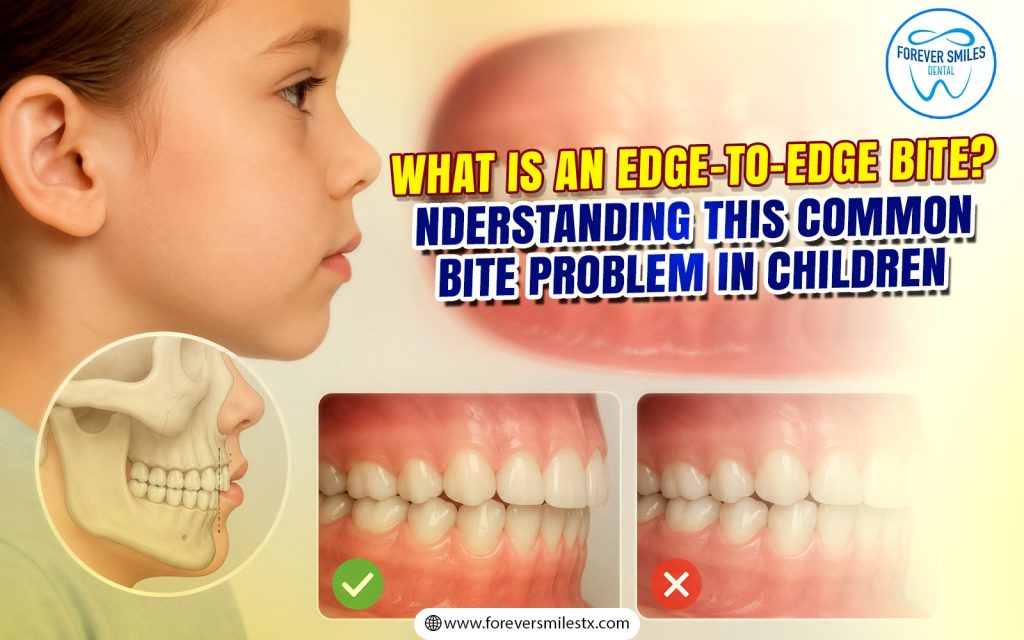
When parents think about their child’s smile, they often focus on whether the teeth are straight. While alignment is important, the way the upper and lower teeth fit together—known as the bite, is just as critical for long-term oral health. A child can have teeth that appear relatively straight but still have a bite problem that affects chewing, jaw function, and even the lifespan of their teeth.
One bite condition that is commonly overlooked is an edge-to-edge bite. Because it doesn’t always cause immediate pain or dramatically affect the appearance of a smile, many parents don’t realize it exists until a dentist points it out during a routine visit. However, the repeated pressure created by this bite pattern can gradually wear down teeth and affect jaw function over time.
The good news is that an edge-to-edge bite can often be recognized early. Understanding what it is, why it develops, and how it affects growing smiles allows parents to make informed decisions about their child’s oral health before small issues become more significant.
What Is an Edge-to-Edge Bite?
A healthy bite allows the upper and lower teeth to fit together in a balanced, functional way. Normally, the upper front teeth overlap the lower front teeth slightly when the mouth is closed. This small overlap helps protect the teeth by distributing biting forces evenly and guiding normal jaw movement.
An edge-to-edge bite occurs when the upper and lower front teeth meet directly against one another instead of overlapping. Rather than one set of teeth sitting slightly in front of the other, both edges come into contact every time the child bites down.
Although this may appear symmetrical, it changes how the teeth function. Instead of sharing biting forces across multiple teeth, the front teeth absorb much more pressure than they are designed to handle.
This repeated contact occurs throughout the day while a child:
- Eats meals
- Bites into foods
- Speaks
- Swallows
- Closes the mouth naturally
Over time, these repeated forces can gradually affect the enamel, the bite, and the jaw.
Unlike some orthodontic conditions that are immediately obvious, an edge-to-edge bite often develops gradually. Many children experience no pain during the early stages, which is why the condition frequently goes unnoticed until signs of tooth wear or bite changes begin to appear.
How Common Is an Edge-to-Edge Bite in Children?
An edge-to-edge bite is less common than conditions such as overbites or mild crowding, but it is still seen regularly in pediatric dentistry and orthodontics. It may affect only the front teeth or occur alongside other bite concerns such as crossbites, crowding, or jaw alignment differences.
In many children, the condition becomes noticeable during the mixed dentition stage, when baby teeth are gradually being replaced by permanent teeth. This period usually occurs between the ages of six and twelve and is a time of significant growth and change within the mouth. As the jaws develop and permanent teeth erupt, the bite continues to evolve. Small differences in jaw growth or tooth positioning can gradually change how the upper and lower teeth meet.
Many parents wonder whether an edge-to-edge bite is simply a temporary stage of development. While some bite relationships do change naturally as children grow, an established edge-to-edge bite typically does not correct itself without careful monitoring. This is why dentists pay close attention to bite development throughout childhood.
Routine evaluations allow dental professionals to determine whether the bite is developing normally or whether it may benefit from closer observation or orthodontic guidance.
What Causes an Edge-to-Edge Bite?
An edge-to-edge bite rarely develops because of a single factor. In most cases, it results from a combination of genetics, jaw growth, tooth eruption, and oral habits.
Genetics and Inherited Jaw Structure
One of the most significant influences is genetics. Children inherit many facial characteristics from their parents, including jaw size, jaw position, and tooth size. If the upper and lower jaws grow in a way that places the front teeth directly against one another, an edge-to-edge bite may develop naturally.
Family history often plays an important role, which is why orthodontic conditions sometimes occur across multiple generations.
Differences in Jaw Growth
Children’s jaws continue developing throughout childhood and adolescence. Sometimes the upper jaw grows slightly less than expected, or the lower jaw develops more prominently. Even small differences in growth can influence how the front teeth meet.
Because jaw growth occurs gradually, these changes may not become obvious until several permanent teeth have erupted.
Tooth Eruption Patterns
Permanent teeth do not always erupt in perfect alignment. Variations in eruption timing or direction can gradually influence the bite. As more permanent teeth appear, small differences in positioning may alter the relationship between the upper and lower front teeth.
While eruption differences alone do not always cause an edge-to-edge bite, they may contribute when combined with other developmental factors.
Thumb Sucking and Prolonged Pacifier Use
Certain oral habits can influence bite development if they continue beyond the early childhood years. Long-term thumb sucking or prolonged pacifier use places repeated pressure on the front teeth and developing jaws. Over time, these forces may contribute to changes in tooth positioning and bite alignment.
The likelihood of long-term effects generally depends on:
- The child’s age
- How often the habit occurs
- The intensity of the habit
- How long it continues
Tongue Thrusting and Oral Habits
Tongue posture also plays an important role in bite development. Some children develop a tongue thrust habit, where the tongue pushes against or between the front teeth during swallowing or speaking. Repeated pressure from the tongue may gradually influence the position of the front teeth and affect how the bite develops.
Mouth Breathing and Facial Development
Many parents are surprised to learn that breathing patterns can influence jaw growth. Children who consistently breathe through their mouths often develop different muscle and tongue positions compared to children who breathe primarily through their noses.
These altered muscle patterns may influence:
- Upper jaw development
- Facial growth
- Bite alignment
- Tongue posture
Although mouth breathing does not automatically cause an edge-to-edge bite, it may contribute to bite changes in some children.
How Does an Edge-to-Edge Bite Affect Everyday Function?
An edge-to-edge bite affects more than the appearance of the teeth. Because the bite guides many everyday activities, even small changes in tooth position can influence how the mouth functions.
Biting Into Foods
The front teeth are designed to cut into foods efficiently. Without their normal overlap, children may find it more difficult to bite into foods such as:
- Apples
- Sandwiches
- Pizza
- Corn on the cob
Some children naturally compensate by using their side teeth or tearing food into smaller pieces before eating.
Chewing Efficiency
Chewing depends on the teeth working together in a coordinated way. When the bite is imbalanced, the jaw may shift slightly during chewing, making the process less efficient and placing additional pressure on certain teeth.
Speaking
The front teeth help guide tongue movement during speech. Although not every child experiences speech changes, certain bite relationships may influence the pronunciation of specific sounds.
Jaw Movement
The teeth and jaw joints work together every time a child opens and closes the mouth.
An edge-to-edge bite may alter normal jaw movement, sometimes causing the muscles to work harder during chewing or speaking.
Distribution of Biting Forces
Perhaps the biggest functional difference is how pressure is distributed. In a healthy bite, chewing forces are shared across multiple teeth.
With an edge-to-edge bite, much of that pressure is concentrated on the edges of the front teeth. Over months and years, this repeated stress can gradually affect the enamel and contribute to changes in tooth structure.
Early Signs Parents Should Watch For
An edge-to-edge bite often develops gradually, so the early signs can be easy to overlook. Many children experience little or no discomfort during the initial stages and naturally adapt to changes in the way they bite or chew. As a result, parents may not recognize the condition until tooth wear or jaw symptoms become more noticeable.
Some of the most common warning signs include:
Front Teeth Meeting Edge to Edge
The clearest indicator is when the upper and lower front teeth touch directly instead of the upper teeth overlapping the lower teeth slightly. This can often be observed when your child gently bites down.
Flattened or Chipped Front Teeth
Repeated contact between the front teeth can gradually wear away enamel. Parents may notice flattened biting edges, small chips, or teeth that appear shorter than before.
Difficulty Biting Into Foods
Children may struggle to bite into foods that require the front teeth to cut efficiently. They may tear food with their hands, use their back teeth instead, or avoid certain foods altogether.
Tooth Sensitivity
As enamel gradually wears down, the teeth may become more sensitive to hot, cold, or sweet foods and drinks.
Jaw Clicking or Fatigue
Some children experience occasional jaw clicking, popping, or tiredness after prolonged chewing. Although these symptoms can have several causes, they may be associated with an imbalanced bite.
Bite Changes Over Time
Parents may notice that the teeth no longer fit together as comfortably as before or that the child shifts the jaw slightly while biting down.
Recognizing these subtle signs early allows for professional evaluation before more significant complications develop.
What Happens If an Edge-to-Edge Bite Is Left Untreated?
Not every child with an edge-to-edge bite will experience serious complications. However, when the bite places excessive pressure on the front teeth year after year, several long-term problems can develop.
Progressive Enamel Wear
The most common consequence is gradual enamel loss. Since enamel cannot regenerate naturally, continued wear leaves the teeth more vulnerable to damage.
Chipped or Cracked Teeth
As enamel becomes thinner, the front teeth become more susceptible to chips, cracks, and fractures during everyday activities or accidental impacts.
Jaw Strain
An uneven bite can increase stress on the jaw muscles and temporomandibular joints (TMJ). Over time, some children may develop jaw fatigue, muscle soreness, or occasional clicking.
Changes in Bite Function
As teeth gradually wear down, the bite itself may continue changing. This can affect chewing efficiency, tooth alignment, and overall comfort.
Greater Orthodontic Complexity
Early bite problems are often easier to manage while a child is still growing. If left untreated, correction may become more complicated during adolescence or adulthood.
How Dentists Diagnose an Edge-to-Edge Bite
Diagnosing an edge-to-edge bite involves evaluating far more than whether the teeth appear straight.
During an examination, dentists assess:
Bite Relationship
The child is asked to bite down naturally while the dentist observes how the upper and lower teeth meet.
Tooth Wear
Early enamel wear, flattened edges, and small chips may indicate excessive biting forces.
Jaw Function
Dentists evaluate how smoothly the jaw opens and closes while checking for clicking, shifting, or restricted movement.
Growth and Development
Children’s bites continue changing as they grow. Comparing current findings with previous examinations helps identify gradual developmental changes.
Imaging When Necessary
If additional information is needed, dental X-rays or other imaging may be recommended to evaluate tooth position, jaw development, or other underlying concerns.
How Forever Smiles Dental Helps Children With Edge-to-Edge Bites
At Forever Smiles Dental, bite development is evaluated as an essential part of every child’s oral health because the way the teeth come together affects much more than appearance. An edge-to-edge bite may seem minor in the early stages, but careful monitoring can help identify changes before they lead to excessive tooth wear, jaw discomfort, or more complex orthodontic concerns.
During routine evaluations, the dental team carefully assesses:
- How the upper and lower teeth fit together
- Jaw growth and facial development
- Tooth eruption patterns
- Early signs of enamel wear
- Changes in bite function over time
- Whether orthodontic evaluation may be beneficial
Parents receive clear explanations about their child’s bite, what changes are considered normal during growth, and which signs should be monitored at home. Every recommendation is based on the child’s stage of development and long-term oral health needs.
By focusing on early detection, preventive care, and continuous growth monitoring, Forever Smiles Dental helps children develop healthier bites, stronger teeth, comfortable jaw function, and confident smiles that last well beyond childhood.
Conclusion
An edge-to-edge bite is more than a simple difference in tooth alignment. It changes the way the upper and lower front teeth function together, placing greater pressure on the enamel and potentially affecting chewing, jaw comfort, and long-term oral health. Because the condition often develops gradually and may not cause immediate discomfort, it can easily go unnoticed during childhood.
Understanding the causes, recognizing the early warning signs, and monitoring bite development throughout the growing years can make a significant difference. Early evaluation allows dentists to identify changes before excessive tooth wear or jaw problems develop, providing more opportunities for conservative treatment and guidance.
While not every edge-to-edge bite requires immediate intervention, regular observation is essential. By staying informed and paying attention to how a child’s bite changes over time, parents can help support healthier teeth, proper jaw function, and confident smiles that last well into adulthood.