Early Signs of a Deep Bite in Children: What Every Parent Should Watch For
September 15, 2026
Dr. Bilkisu Idakoji
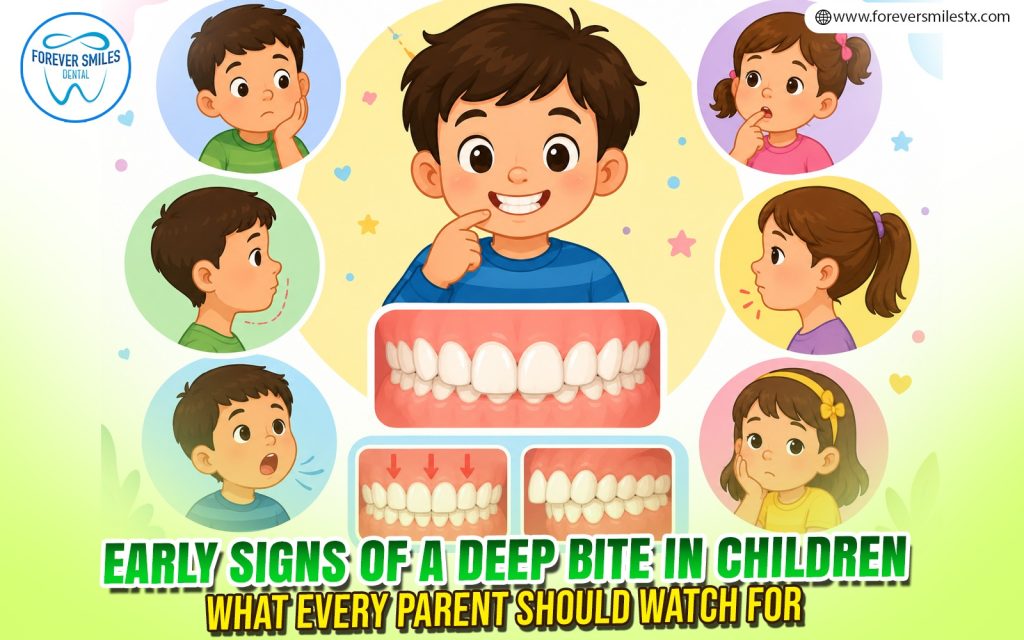
Parents often notice when a child’s teeth are crooked or when a new tooth begins to erupt. However, changes in the way the upper and lower teeth fit together are much easier to overlook. A child may have a developing bite problem long before they complain of discomfort or show obvious symptoms.
One condition that can quietly develop during childhood is a deep bite. Because it often affects how the front teeth overlap, parents may not realize anything is unusual until the overlap becomes more pronounced or a dentist points it out during a routine visit.
Recognizing the early signs of a deep bite can help ensure your child’s smile develops as healthily as possible. While not every deep bite requires immediate treatment, identifying it early allows dental professionals to monitor growth, evaluate bite development, and recommend care if needed.
What Is a Deep Bite?
A deep bite is a type of bite misalignment in which the upper front teeth overlap the lower front teeth more than they normally should when the mouth is closed.
A small amount of overlap is completely normal and helps the teeth function properly during biting and chewing. However, when the upper front teeth cover a significant portion of the lower front teeth, the bite is considered deeper than normal. In some children, the lower front teeth become difficult to see when they bite down. In more advanced cases, the lower teeth may contact the gum tissue behind the upper front teeth.
The severity of a deep bite varies from child to child, which is why professional evaluation is important.
Understanding How a Healthy Bite Should Look
When a child closes their mouth naturally, the upper front teeth should overlap the lower front teeth slightly while still allowing part of the lower teeth to remain visible. The upper and lower teeth should work together comfortably without placing excessive pressure on any one area of the mouth.
A healthy bite supports efficient chewing, protects the teeth from unnecessary wear, and contributes to balanced jaw function.
What Makes a Bite “Deep”?
The difference isn’t simply how the teeth look, it’s how much they overlap and how they function together. As the overlap increases, the lower front teeth become more hidden behind the upper teeth. In some children, this greater overlap changes the way biting forces are distributed, placing additional pressure on the front teeth and surrounding tissues.
Is a Deep Bite the Same as an Overbite?
Not exactly.
An overbite describes the normal vertical overlap between the upper and lower front teeth. A deep bite is a type of excessive overbite where the upper teeth overlap the lower teeth more than expected. In other words, every child has some degree of overbite, but only some children have a deep bite.
The Early Signs of a Deep Bite Parents Should Never Ignore
Many children with a deep bite don’t complain of pain. Instead, the earliest clues are often subtle changes that parents notice during brushing, family photos, or everyday meals.
The Lower Front Teeth Almost Disappear When Your Child Bites Down
One of the easiest signs to recognize is the amount of overlap between the front teeth. Ask your child to bite their back teeth together naturally. If very little of the lower front teeth remains visible, it may be worth mentioning during your next dental appointment.
Although this doesn’t automatically confirm a deep bite, it is one of the most common early observations.
The Upper Teeth Cover More of the Lower Teeth Than Expected
Sometimes parents notice that the upper teeth seem to dominate the smile. Compared with earlier photographs, the overlap may appear to increase gradually as permanent teeth erupt. Changes that develop slowly are often harder to recognize because parents see their child’s smile every day. Looking back at older photographs can make gradual bite changes easier to spot.
Red Marks or Soreness Behind the Upper Front Teeth
In some children, the lower front teeth contact the gum tissue behind the upper front teeth when biting down. Repeated contact may leave small red areas or mild irritation.
Children may occasionally mention soreness while brushing or eating certain foods. Although other dental conditions can also cause gum irritation, this is an important observation to share with your dentist.
Flattened or Worn Front Teeth
Excessive contact between the front teeth may gradually wear away small amounts of enamel. Parents may notice that the biting edges of the front teeth appear flatter than before. More often, dentists detect these early wear patterns during routine examinations before they become obvious at home.
Your Child Bites Into Food Differently
Watch how your child eats foods such as apples, sandwiches, or pizza. Some children with a developing deep bite adjust the way they bite into food without realizing it. They may pull food apart instead of biting straight through it or use the side of their mouth more often. Not every child with these habits has a deep bite, but they can provide helpful clues.
Jaw Movement That Looks Unusual
Pay attention to how your child’s jaw moves when they slowly close their mouth. Does it seem to shift slightly before the teeth come together? Does your child repeatedly reposition their jaw while chewing? Although several bite conditions can influence jaw movement, these observations deserve further evaluation.
Teeth Seem to Close Too Tightly
Some children describe their teeth as feeling “too close together” or say their mouth feels different when biting. Parents may also notice that the upper and lower teeth appear to fit together very tightly. This isn’t always caused by a deep bite, but it can be one sign that the bite relationship has changed.
Changes in Your Child’s Smile Over Time
Children’s smiles naturally change as permanent teeth erupt. However, if the upper teeth begin covering progressively more of the lower teeth or the smile appears noticeably different over several months, it’s worth discussing the change with your dentist. Monitoring photographs taken over time can help identify gradual changes that might otherwise go unnoticed.
What Happens If a Deep Bite Is Left Untreated?
Not every deep bite causes immediate problems, and not every child will need treatment. However, when a deep bite is significant or continues to worsen as a child grows, it may affect the teeth, gums, and overall bite.
The effects depend on factors such as the severity of the bite, jaw growth, and how the permanent teeth continue to develop.
Increased Tooth Wear
The front teeth are designed to work together when biting into food, but excessive overlap can place greater pressure on them than normal.
Over time, this repeated contact may gradually wear down the enamel along the biting edges. In some children, the wear is so gradual that parents don’t notice it until a dentist points it out during a routine examination.
Because enamel does not grow back once it has worn away, identifying unusual wear early is important.
Gum Irritation
In a more pronounced deep bite, the lower front teeth may touch the gum tissue behind the upper front teeth instead of resting comfortably below them.
Repeated contact can lead to:
- Redness
- Tenderness
- Minor irritation
- Small indentations in the gum tissue
Children may not always mention these symptoms, so regular dental examinations are helpful for identifying them.
Changes in Bite Function
A healthy bite allows chewing forces to be shared across multiple teeth.
When the upper front teeth overlap excessively, some teeth may absorb more pressure while others contribute less during chewing.
Although children often adapt well, an imbalanced bite may affect how efficiently the teeth work together over time.
Potential Effects on Jaw Development
The teeth and jaws develop together throughout childhood.
While a deep bite does not automatically affect jaw growth, significant bite discrepancies may influence how the jaws function as permanent teeth continue erupting.
Each child’s growth pattern is different, which is why dentists monitor bite development over several years rather than making decisions based on a single visit.
How Dentists Diagnose a Deep Bite
Diagnosing a deep bite involves much more than measuring the amount of overlap between the front teeth. The dentist evaluates how the teeth function together and whether other developmental factors are involved.
Clinical Examination
During the examination, the dentist assesses:
- The amount of vertical overlap
- Tooth wear
- Gum health
- Bite relationships
- Jaw movement
- Overall oral development
They also observe how your child bites and chews, looking for signs that may not be obvious during a quick glance.
Evaluating Tooth Eruption
The position of erupting permanent teeth provides valuable information.
The dentist monitors:
- Which permanent teeth have erupted
- Available space within the dental arches
- Crowding
- Changes in tooth alignment
This helps determine whether the bite is changing as expected or whether additional monitoring is needed.
Assessing Jaw Growth
Children’s jaws continue growing throughout childhood and adolescence. The relationship between the upper and lower jaws influences how the teeth fit together. Monitoring growth allows dentists to identify developing bite concerns while the mouth is still changing.
When Dental X-Rays May Be Recommended
Dental X-rays are not needed for every child with a deep bite. However, they may be recommended to evaluate:
- Developing permanent teeth
- Tooth position beneath the gums
- Jaw development
- Available space
- Other hidden factors influencing the bite
These images help provide a more complete understanding of your child’s oral development.
Treatment Options for Children With a Deep Bite
Treatment depends on the child’s individual needs rather than the appearance of the bite alone.
Monitoring During Growth
Many children only require periodic observation. The dentist continues evaluating bite changes during routine visits to determine whether normal growth is improving the situation.
Early Orthodontic Evaluation
If the bite appears likely to create future concerns, the dentist may recommend an orthodontic evaluation. This consultation helps determine whether orthodontic treatment could improve tooth alignment or bite relationships. An evaluation does not automatically mean braces are needed immediately.
Orthodontic Appliances
When treatment is appropriate, orthodontic appliances may be used to improve how the upper and lower teeth fit together. Depending on the child’s stage of development, treatment may involve braces or other orthodontic appliances selected specifically for the child’s needs.
Why Choose Forever Smiles Dental?
At Forever Smiles Dental, we believe every child deserves personalized care that supports healthy growth and lifelong oral health.
Dr. B takes a gentle, compassionate approach while carefully monitoring your child’s teeth, bite, and jaw development during every stage of childhood. Whether your child has a developing deep bite or another orthodontic concern, we focus on understanding the cause before recommending any treatment.
We also believe that informed parents make confident decisions. That’s why we take the time to explain your child’s bite development, answer your questions, and discuss whether observation, continued monitoring, or further evaluation is the most appropriate next step. To help make quality dental care more accessible, Forever Smiles Dental offers an In-House Dental Insurance Plan and accepts CareCredit and LendingClub, making it easier for families to receive the care their children need.
Final Thoughts
A deep bite often develops gradually, making it easy to overlook during childhood. Many children experience little or no discomfort, even when the bite is becoming more pronounced.
Knowing what to watch for, such as excessive overlap of the front teeth, tooth wear, gum irritation, or changes in chewing, can help parents recognize when a professional evaluation is worthwhile.
The good news is that not every deep bite requires treatment. Many simply benefit from careful observation as the teeth and jaws continue to develop. When treatment is needed, identifying the concern early gives your dental team more opportunities to recommend the most appropriate approach.
If you’ve noticed changes in your child’s bite or have questions about how their teeth are developing, scheduling a dental evaluation can provide reassurance and a clear understanding of the next steps. At Forever Smiles Dental, we’re here to help your child build a healthy, functional smile that lasts well into adulthood.